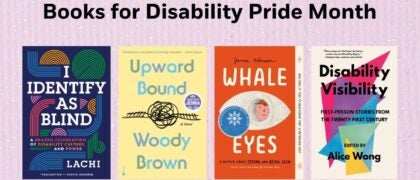
Books for Disability Pride Month
July is Disability Pride Month and we’re highlighting books that center disabled stories and creators. Browse our collections here: Middle School | High School


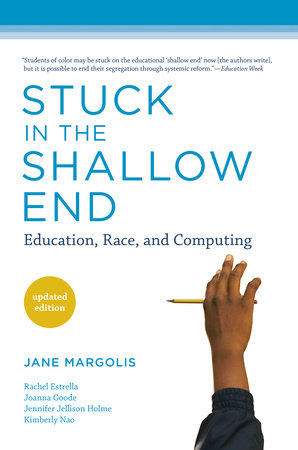
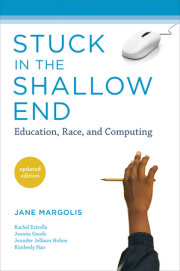
The number of African Americans and Latino/as receiving undergraduate and advanced degrees in computer science is disproportionately low. And relatively few African American and Latino/a high school students receive the kind of institutional encouragement, educational opportunities, and preparation needed for them to choose computer science as a field of study and profession. In Stuck in the Shallow End, Jane Margolis and coauthors look at the daily experiences of students and teachers in three Los Angeles public high schools: an overcrowded urban high school, a math and science magnet school, and a well-funded school in an affluent neighborhood. They find an insidious “virtual segregation” that maintains inequality.
The race gap in computer science, Margolis discovers, is one example of the way students of color are denied a wide range of occupational and educational futures. Stuck in the Shallow End is a story of how inequality is reproduced in America—and how students and teachers, given the necessary tools, can change the system. Since the 2008 publication of Stuck in the Shallow End, the book has found an eager audience among teachers, school administrators, and academics. This updated edition offers a new preface detailing the progress in making computer science accessible to all, a new postscript, and discussion questions (coauthored by Jane Margolis and Joanna Goode).
The number of African Americans and Latino/as receiving undergraduate and advanced degrees in computer science is disproportionately low. And relatively few African American and Latino/a high school students receive the kind of institutional encouragement, educational opportunities, and preparation needed for them to choose computer science as a field of study and profession. In Stuck in the Shallow End, Jane Margolis and coauthors look at the daily experiences of students and teachers in three Los Angeles public high schools: an overcrowded urban high school, a math and science magnet school, and a well-funded school in an affluent neighborhood. They find an insidious “virtual segregation” that maintains inequality.
The race gap in computer science, Margolis discovers, is one example of the way students of color are denied a wide range of occupational and educational futures. Stuck in the Shallow End is a story of how inequality is reproduced in America—and how students and teachers, given the necessary tools, can change the system. Since the 2008 publication of Stuck in the Shallow End, the book has found an eager audience among teachers, school administrators, and academics. This updated edition offers a new preface detailing the progress in making computer science accessible to all, a new postscript, and discussion questions (coauthored by Jane Margolis and Joanna Goode).
July is Disability Pride Month and we’re highlighting books that center disabled stories and creators. Browse our collections here: Middle School | High School