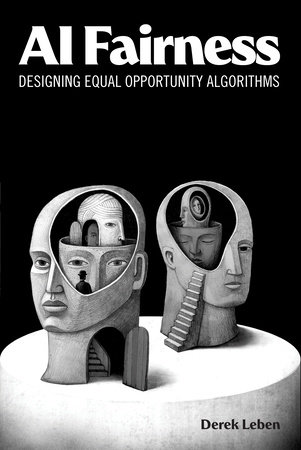
AI Fairness

Designing Equal Opportunity Algorithms

A theory of justice for AI models making decisions about employment, lending, education, criminal justice, and other important social goods.

Decisions about important social goods like education, employment, housing, loans, health care, and criminal justice are all becoming increasingly automated with the help of artificial intelligence. But because AI models are trained on data with historical inequalities, they often produce unequal outcomes for members of disadvantaged groups. In AI Fairness, Derek Leben draws on traditional philosophical theories of fairness to develop a framework for evaluating AI models, which can be called a theory of algorithmic justice—a theory inspired by the theory of justice developed by the American philosopher John Rawls.

For several years now, researchers who design artificial intelligence models have investigated the causes of inequalities in AI decisions and proposed techniques for mitigating them. It turns out that in most realistic conditions it is impossible to comply with all metrics simultaneously. Because of this, companies using AI systems will have to choose which metric they think is the correct measure of fairness, and regulators will need to determine how to apply currently existing laws to AI systems. Leben provides a detailed set of practical recommendations for companies looking to evaluate their artificial intelligence systems and regulators thinking about laws around AI systems, and he offers an honest analysis of the costs of implementing fairness in AI systems—as well as when these costs may or may not be acceptable.
Derek Leben is Associate Teaching Professor of Business Ethics at the Tepper School of Business at Carnegie Mellon University. As founder of the consulting group Ethical Algorithms, he has worked with governments and companies to develop policies on fairness and benefit for AI and autonomous systems.
Introduction
Chapter 1. The Problem
Chapter 2. Fairness
Chapter 3. AI
Chapter 4. A Theory of Algorithmic Justice
Chapter 5. Equal Treatment
Chapter 6. Relevance
Chapter 7. Equal Impact
Chapter 8. Prices and Wages
Chapter 9. The Cost of Fairness
Epilogue: Sacrifices Not Worth Making

About

A theory of justice for AI models making decisions about employment, lending, education, criminal justice, and other important social goods.

Decisions about important social goods like education, employment, housing, loans, health care, and criminal justice are all becoming increasingly automated with the help of artificial intelligence. But because AI models are trained on data with historical inequalities, they often produce unequal outcomes for members of disadvantaged groups. In AI Fairness, Derek Leben draws on traditional philosophical theories of fairness to develop a framework for evaluating AI models, which can be called a theory of algorithmic justice—a theory inspired by the theory of justice developed by the American philosopher John Rawls.

For several years now, researchers who design artificial intelligence models have investigated the causes of inequalities in AI decisions and proposed techniques for mitigating them. It turns out that in most realistic conditions it is impossible to comply with all metrics simultaneously. Because of this, companies using AI systems will have to choose which metric they think is the correct measure of fairness, and regulators will need to determine how to apply currently existing laws to AI systems. Leben provides a detailed set of practical recommendations for companies looking to evaluate their artificial intelligence systems and regulators thinking about laws around AI systems, and he offers an honest analysis of the costs of implementing fairness in AI systems—as well as when these costs may or may not be acceptable.

Author

Derek Leben is Associate Teaching Professor of Business Ethics at the Tepper School of Business at Carnegie Mellon University. As founder of the consulting group Ethical Algorithms, he has worked with governments and companies to develop policies on fairness and benefit for AI and autonomous systems.

Table of Contents

Introduction
Chapter 1. The Problem
Chapter 2. Fairness
Chapter 3. AI
Chapter 4. A Theory of Algorithmic Justice
Chapter 5. Equal Treatment
Chapter 6. Relevance
Chapter 7. Equal Impact
Chapter 8. Prices and Wages
Chapter 9. The Cost of Fairness
Epilogue: Sacrifices Not Worth Making
Mental Health Awareness Month Resources

May is Mental Health Awareness Month and educators are increasingly aware that integrating social-emotional learning into the curriculum is critical if we want students to succeed both in and out of the classroom. Download the thematic educator guides on Teaching About Anxiety and Mindfulness and Teaching About Student Wellness. Explore our specially curated collections on

Read more

Books for Asian American, Native Hawaiian, and Pacific Islander Heritage Month

Each May, we honor the stories, histories, and cultures of Asian Americans, Native Hawaiians, and Pacific Islanders. Below is a selection of acclaimed fiction and nonfiction books by AANHPI creators to share with your students this month and throughout the year. AANHPI Creators – Middle School titles AANHPI Creators – High School titles .

Read more