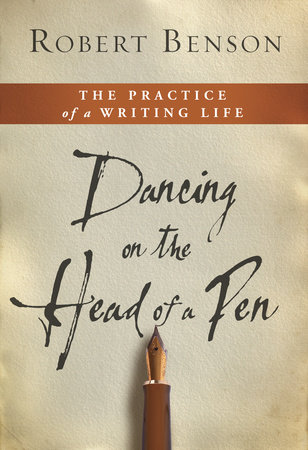
Dancing on the Head of a Pen

The Practice of a Writing Life

A compelling combination of advice and inspiration, Dancing on the Head of a Pen will challenge and encourage writers, artists, musicians, painters—anyone drawn to a life of artistic expression.
 
Digging deeply into his own writing habits, failures, and successes, Robert Benson helps you choose the ideal audience for your work, commit to it, and overcome the hurdles that inevitably confront both aspiring artists and accomplished professionals. Extending beyond the craft of writing, this gentle book moves into a rich discussion on the relationship between spirituality and art. Including wisdom from revered writers past and present, Dancing on the Head of a Pen is a beautiful mosaic of inspiration, practical help, and a glimpse into the disciplines that shape one writer’s life.
 
Dancing on the Head of a Pen is a pure delight to read. Encouraging, honest, practical, and important. I needed this book.”
—Melody Carlson, author of more 200 books including Finding Alice 
 
“With deceptive simplicity and an almost seductive easiness in his voice, Benson lays open before us the filigreed mystique of the writing life in all its beauty, its unmitigated angst, and its inescapable vocation.”
—Phyllis Tickle, author of numerous books including The Divine Hours
 
“Robert Benson’s Dancing on the Head of a Pen is a gem. It is wise, witty, and inspiring—a trifecta seldom achieved by a book on the writing life.”
—James Scott Bell, bestselling author of Plot & Structure

Robert Benson is the author of several books, including Living Prayer, Venite: A Book of Daily Prayer, and Between the Dreaming and the Coming True. He lives in Nashville, Tennessee. View titles by Robert Benson

 “I think I have a story to tell. I just do not know how to begin. Can you tell me how to write a book?”
 
Most often I hear such a comment during the question-and-
answer session after I have given a reading or a talk. The
question also appears in some of the letters from people who
are kind enough to read my books and kind enough to write
me after they have read them.
 
The question comes up more and more these days. The
digital age has changed so many things about the way writers
and publishers find each other and ferret out access to
sales and media outlets. And more and more the writer must
not only make the art but deliver the audience as well. The
whole process can seem a little daunting.
 
I always take the question seriously. I was once in the
same spot and grateful for any help that might move me
along toward learning to get a story down on paper.
 
Henri Nouwen was right when he said, “As long as we
have stories to tell to each other there is hope.”
 
Sharing the things I know about how a person goes
about telling his story seems only right. Perhaps it is even, as
the old prayer book says, a good and joyful thing.


My father came into my office one day at the publishing
business the family owned and handed me a stack of cassette
tapes and a stack of manuscript pages, and then he gave me
an assignment. “I met this young woman in Canada,” he said.
“I liked the things she was saying when she was speaking
onstage, and I told her we would help her make a book out
of it. I have been working on it some, but I cannot seem to
capture it somehow. Why don’t you give it a shot?”
 
The book I helped the young woman make in those
early days of my wordsmithing career is considerably different
from the books now published under my own name. But
it was the first chance given to me to learn how to make the
only art I ever wanted to make—a book.
 
It was my first ghostwriting assignment. I was nineteen
years old.
 
Many years and many books later, I found myself leaning
on my best friend’s doorjamb on a warm afternoon. I
was half conversing about writing a book and half watching
the roses blooming in our back garden. Out of one eye I was
also watching the fountain beside the path that leads to the
studio where I write.
 
I always enjoy conversations about writing and writers.
To be sure, the first joy of keeping such a conversation going
is rooted in the fact that any conversation that keeps a particular
writer from the burden of trudging back to the studio
and back to writing sentences is a welcome conversation.
The subject hardly matters. What counts is the ability to put
enough words into the air to delay the inevitable.
 
My friend told me about her recent conversation with a
sweet woman we both know. Our mutual friend had been
thinking she might try to write a book. The two of them
thought a book might be down in there somewhere, hidden
in one of the stories of her life, but the one who aspired to be
the teller of the tale did not know how to begin.
 
“What should I tell her?” my friend asked. “What does
she do to begin? How does one go about writing a book?”


The summer sun dropped down another little bit, and to get
it out of my eyes, I shifted from the left doorjamb to the
right and went into my best artist-as-teacher pose.
 
“This is the first thing I would tell someone who wants
to make a book.”
 
And then I began to expound, and the first thing and
the other nine or so went on for a bit. I am a writer. Embellishing
is one of my gifts. I also know how to stall when my
own writing is not going well.
 
I described the steps I take when I begin to make a book.
 
Some of them are habits stolen from other writers, writers far
better than I am. Some of them are practices discovered on
my own after years of dancing on the head of a pen. Some
are disciplines I stumbled upon to feed both the caliber of
the writing and the work of being a writer.
 
After some forty years and nearly twenty books, I have
learned I do not know a lot about a lot of things, but I do
know how to write a book.

Praise for Dancing on the Head of a Pen

“Robert Benson’s Dancing on the Head of a Pen is a gem. It is wise, witty, and inspiring—a trifecta seldom achieved by a book on the writing life.”
—James Scott Bell, best-selling author of Plot & Structure

“With deceptive simplicity and a kind of almost-seductive easiness in his voice, Robert Benson lays open before us the filigreed mystique of the writing life in all its beauty, its unmitigated angst, and its inescapable vocation. This one is a classic.”
—Phyllis Tickle, author of The Divine Hours

“I needed this book. And I need to read it again—and probably again. Thank goodness, it’s a pure delight to read. Encouraging, honest, practical, and important. If you’re a writer—or have any aspirations to become one—Robert Benson’s words will resonate deeply within you. I will highly recommend this to all my writer friends and even the writer friends I haven’t yet met.”
—Melody Carlson, author of more than 200 books, including Finding Alice and Diary of a Teenage Girl series

“There is little more enjoyable for a writer than to read about the craft, especially when the book is fashioned with the grace and style of Robert Benson’s prose. You don’t even have to be a writer to savor this delicacy. Just do yourself a favor and settle in for a treat that goes down like dessert but is also full of nutrition. I read everything I can find on writing, and I loved this.”
—Jerry B. Jenkins, novelist and biographer

“I love reading and spending time with what Robert Benson writes. I think it is because his words and God’s Spirit meet and dance on each page. In this book Benson generously shares how writing becomes art. Dancing on the Head of a Pen is direction for struggling writers and balm for the bruised writer’s heart.”
—Sharon Ewell Foster, author of the Christy Award–winner Passing by Samaria and Shaara Prize–winner The Resurrection of Nat Turner

About

A compelling combination of advice and inspiration, Dancing on the Head of a Pen will challenge and encourage writers, artists, musicians, painters—anyone drawn to a life of artistic expression.
 
Digging deeply into his own writing habits, failures, and successes, Robert Benson helps you choose the ideal audience for your work, commit to it, and overcome the hurdles that inevitably confront both aspiring artists and accomplished professionals. Extending beyond the craft of writing, this gentle book moves into a rich discussion on the relationship between spirituality and art. Including wisdom from revered writers past and present, Dancing on the Head of a Pen is a beautiful mosaic of inspiration, practical help, and a glimpse into the disciplines that shape one writer’s life.
 
Dancing on the Head of a Pen is a pure delight to read. Encouraging, honest, practical, and important. I needed this book.”
—Melody Carlson, author of more 200 books including Finding Alice 
 
“With deceptive simplicity and an almost seductive easiness in his voice, Benson lays open before us the filigreed mystique of the writing life in all its beauty, its unmitigated angst, and its inescapable vocation.”
—Phyllis Tickle, author of numerous books including The Divine Hours
 
“Robert Benson’s Dancing on the Head of a Pen is a gem. It is wise, witty, and inspiring—a trifecta seldom achieved by a book on the writing life.”
—James Scott Bell, bestselling author of Plot & Structure

Author

Robert Benson is the author of several books, including Living Prayer, Venite: A Book of Daily Prayer, and Between the Dreaming and the Coming True. He lives in Nashville, Tennessee. View titles by Robert Benson

Excerpt

 “I think I have a story to tell. I just do not know how to begin. Can you tell me how to write a book?”
 
Most often I hear such a comment during the question-and-
answer session after I have given a reading or a talk. The
question also appears in some of the letters from people who
are kind enough to read my books and kind enough to write
me after they have read them.
 
The question comes up more and more these days. The
digital age has changed so many things about the way writers
and publishers find each other and ferret out access to
sales and media outlets. And more and more the writer must
not only make the art but deliver the audience as well. The
whole process can seem a little daunting.
 
I always take the question seriously. I was once in the
same spot and grateful for any help that might move me
along toward learning to get a story down on paper.
 
Henri Nouwen was right when he said, “As long as we
have stories to tell to each other there is hope.”
 
Sharing the things I know about how a person goes
about telling his story seems only right. Perhaps it is even, as
the old prayer book says, a good and joyful thing.


My father came into my office one day at the publishing
business the family owned and handed me a stack of cassette
tapes and a stack of manuscript pages, and then he gave me
an assignment. “I met this young woman in Canada,” he said.
“I liked the things she was saying when she was speaking
onstage, and I told her we would help her make a book out
of it. I have been working on it some, but I cannot seem to
capture it somehow. Why don’t you give it a shot?”
 
The book I helped the young woman make in those
early days of my wordsmithing career is considerably different
from the books now published under my own name. But
it was the first chance given to me to learn how to make the
only art I ever wanted to make—a book.
 
It was my first ghostwriting assignment. I was nineteen
years old.
 
Many years and many books later, I found myself leaning
on my best friend’s doorjamb on a warm afternoon. I
was half conversing about writing a book and half watching
the roses blooming in our back garden. Out of one eye I was
also watching the fountain beside the path that leads to the
studio where I write.
 
I always enjoy conversations about writing and writers.
To be sure, the first joy of keeping such a conversation going
is rooted in the fact that any conversation that keeps a particular
writer from the burden of trudging back to the studio
and back to writing sentences is a welcome conversation.
The subject hardly matters. What counts is the ability to put
enough words into the air to delay the inevitable.
 
My friend told me about her recent conversation with a
sweet woman we both know. Our mutual friend had been
thinking she might try to write a book. The two of them
thought a book might be down in there somewhere, hidden
in one of the stories of her life, but the one who aspired to be
the teller of the tale did not know how to begin.
 
“What should I tell her?” my friend asked. “What does
she do to begin? How does one go about writing a book?”


The summer sun dropped down another little bit, and to get
it out of my eyes, I shifted from the left doorjamb to the
right and went into my best artist-as-teacher pose.
 
“This is the first thing I would tell someone who wants
to make a book.”
 
And then I began to expound, and the first thing and
the other nine or so went on for a bit. I am a writer. Embellishing
is one of my gifts. I also know how to stall when my
own writing is not going well.
 
I described the steps I take when I begin to make a book.
 
Some of them are habits stolen from other writers, writers far
better than I am. Some of them are practices discovered on
my own after years of dancing on the head of a pen. Some
are disciplines I stumbled upon to feed both the caliber of
the writing and the work of being a writer.
 
After some forty years and nearly twenty books, I have
learned I do not know a lot about a lot of things, but I do
know how to write a book.

Praise

Praise for Dancing on the Head of a Pen

“Robert Benson’s Dancing on the Head of a Pen is a gem. It is wise, witty, and inspiring—a trifecta seldom achieved by a book on the writing life.”
—James Scott Bell, best-selling author of Plot & Structure

“With deceptive simplicity and a kind of almost-seductive easiness in his voice, Robert Benson lays open before us the filigreed mystique of the writing life in all its beauty, its unmitigated angst, and its inescapable vocation. This one is a classic.”
—Phyllis Tickle, author of The Divine Hours

“I needed this book. And I need to read it again—and probably again. Thank goodness, it’s a pure delight to read. Encouraging, honest, practical, and important. If you’re a writer—or have any aspirations to become one—Robert Benson’s words will resonate deeply within you. I will highly recommend this to all my writer friends and even the writer friends I haven’t yet met.”
—Melody Carlson, author of more than 200 books, including Finding Alice and Diary of a Teenage Girl series

“There is little more enjoyable for a writer than to read about the craft, especially when the book is fashioned with the grace and style of Robert Benson’s prose. You don’t even have to be a writer to savor this delicacy. Just do yourself a favor and settle in for a treat that goes down like dessert but is also full of nutrition. I read everything I can find on writing, and I loved this.”
—Jerry B. Jenkins, novelist and biographer

“I love reading and spending time with what Robert Benson writes. I think it is because his words and God’s Spirit meet and dance on each page. In this book Benson generously shares how writing becomes art. Dancing on the Head of a Pen is direction for struggling writers and balm for the bruised writer’s heart.”
—Sharon Ewell Foster, author of the Christy Award–winner Passing by Samaria and Shaara Prize–winner The Resurrection of Nat Turner