"You've stumbled on to something much larger than you can possibly imagine."

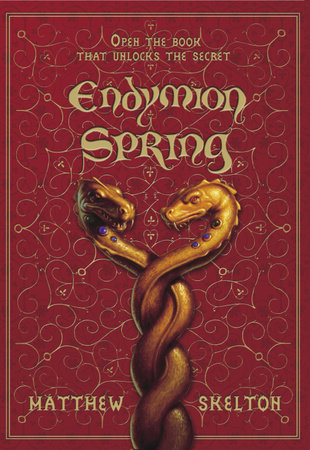
In the dead of night, a cloaked figure drags a heavy box through snow-covered streets. The chest, covered in images of mythical beasts, can only be opened when the fangs of its serpent's-head clasp taste blood.

Centuries later, in an Oxford library, a boy touches a strange book and feels something pierce his finger. The volume is blank, wordless, but its paper has fine veins running through it and seems to quiver, as if it's alive. Words begin to appear on the page--words no one but the boy can see.

And so unfolds a timeless secret . . . .
© Perry Hagopian
Taking My Imaginary Dog for a Walk

Not many people know this, but I have an invisible dog. It’s my constant companion, a devoted friend. No one else can see it, but I know it’s there. It’s been following me around for years—ever since I was a boy, dreaming of becoming a writer.
My dog is my imagination. And, like real dogs, it requires frequent exercise.

Luckily, there’s a field not far from where I live, and when I need to stretch my creative legs, I’ll head outside, let my imaginary dog off the leash, and allow it to run free. This is how I do my best thinking. As I walk, I toss sticks to my dog. Sticks are ideas. It may be something I’m working on, an image that has caught my mind or a scrape I’ve got one of my characters into, but for a while I’ll lose sight of the world around me and disappear into the story I’m trying to create. And sometimes, while I’m out walking, my dog will return with something in its mouth. It may be the old stick, slightly chewed and slobbery now, but sometimes it’s something much more appetizing: a bigger, better stick—a brand-new idea! That’s when I get really excited and sprint back to my room to continue writing. . . .

I went on hundreds of imaginary dog walks while writing my second novel, The Story of Cirrus Flux. I journeyed to the icy limits of the known world, where I survived a shipwreck and discovered a strange new species of fiery bird; I travelled back in time to eighteenth-century London, where I encountered a diabolical hypnotist and several fiendish scientists, all intent on getting their hands on divine power; and I came across the sympathetic plight of children abandoned at the Foundling Hospital, whose mothers were often too poor to be able to care for them and who left heartbreaking tokens with their babies, so that they might not be forgotten. Along the way I met two remarkably brave young characters, Cirrus and Pandora, whose lives were in grave danger. I hope you enjoy their story.

And now, if you’ll excuse me, I think I’d better take my imaginary dog for another walk. . . .
 
- Matthew Skelton View titles by Matthew Skelton
Blake checked his watch—thirty-six minutes—and sighed.

He tried walking backwards now, tapping the books in reverse order, to see if this would help pass the time.
A series of stern-looking portraits glared down at him from the walls. Like magicians, they were dressed in dark capes and had sharp, pointy beards. Elaborate ruffs, like squashed chrysanthemums, burst from their collars. The older men had jaded eyes and tortoise-like skin, but there were also a few pale-faced boys like himself. He glanced at their nameplates: Thomas Sternhold (1587–1608); Jeremiah Wood (1534–1609); Isaac Wilkes (1616–37); Lucius St. Boniface de la Croix (1599–1666). Each man was holding a small book and pointing to a relevant passage with a forefinger, as though reminding future generations to remain studious and well-behaved.

Blake disregarded their frowns of disapproval and continued running his fingers along the books, rapping the spines with the back of his knuckles.

All of a sudden, he stopped.

One of the volumes had struck him back! Like a cat, it had taken a playful swipe at his fingers and ducked back into hiding. He whisked his hand away, as though stung.
He looked at his fingers, but couldn’t see anything unusual. They were smeared with dust, but there was no obvious mark or injury on his skin. Then he looked at the books to see which one had leaped out at him, but they all seemed pretty ordinary, too. Just row upon row of crumbly old volumes, like toy soldiers in leather uniforms standing to attention—except that one of them had tried to force its way into his hand.

He sucked on his finger thoughtfully. A thin trail of blood, like a paper cut, was forming where the book had nicked his knuckle.

All around him the library was sleeping in the hot, still afternoon. Shafts of sunlight hung in the air like dusty curtains and a clock ticked somewhere in the distance, a ponderous sound that seemed to slow down time. Small footsteps crept along the floorboards above. That was probably his sister, Duck, investigating upstairs. But no one else was around.
Only Mephistopheles, the college cat, a sinewy black shadow with claws as sharp as pins, was sunbathing on a strip of carpet near the window and he only cared about one thing: himself.
As far as Blake could tell, he was entirely alone. Apart, that is, from whatever was lurking on the shelf.

Discussion Guide for Endymion Spring

Provides questions, discussion topics, suggested reading lists, introductions and/or author Q&As, which are intended to enhance reading groups’ experiences.

(Please note: the guide displayed here is the most recently uploaded version; while unlikely, any page citation discrepancies between the guide and book is likely due to pagination differences between a book’s different formats.)

  • SUBMITTED
    Kirkus Reviews Editor Choice Award
  • SUBMITTED
    New York Times Bestseller
“[Endymion Spring] may give Dan Brown’s Da Vinci Code a run for its money. . . .
It is unputdownable.”–The Irish Independent

About

"You've stumbled on to something much larger than you can possibly imagine."

In the dead of night, a cloaked figure drags a heavy box through snow-covered streets. The chest, covered in images of mythical beasts, can only be opened when the fangs of its serpent's-head clasp taste blood.

Centuries later, in an Oxford library, a boy touches a strange book and feels something pierce his finger. The volume is blank, wordless, but its paper has fine veins running through it and seems to quiver, as if it's alive. Words begin to appear on the page--words no one but the boy can see.

And so unfolds a timeless secret . . . .

Author

© Perry Hagopian
Taking My Imaginary Dog for a Walk

Not many people know this, but I have an invisible dog. It’s my constant companion, a devoted friend. No one else can see it, but I know it’s there. It’s been following me around for years—ever since I was a boy, dreaming of becoming a writer.
My dog is my imagination. And, like real dogs, it requires frequent exercise.

Luckily, there’s a field not far from where I live, and when I need to stretch my creative legs, I’ll head outside, let my imaginary dog off the leash, and allow it to run free. This is how I do my best thinking. As I walk, I toss sticks to my dog. Sticks are ideas. It may be something I’m working on, an image that has caught my mind or a scrape I’ve got one of my characters into, but for a while I’ll lose sight of the world around me and disappear into the story I’m trying to create. And sometimes, while I’m out walking, my dog will return with something in its mouth. It may be the old stick, slightly chewed and slobbery now, but sometimes it’s something much more appetizing: a bigger, better stick—a brand-new idea! That’s when I get really excited and sprint back to my room to continue writing. . . .

I went on hundreds of imaginary dog walks while writing my second novel, The Story of Cirrus Flux. I journeyed to the icy limits of the known world, where I survived a shipwreck and discovered a strange new species of fiery bird; I travelled back in time to eighteenth-century London, where I encountered a diabolical hypnotist and several fiendish scientists, all intent on getting their hands on divine power; and I came across the sympathetic plight of children abandoned at the Foundling Hospital, whose mothers were often too poor to be able to care for them and who left heartbreaking tokens with their babies, so that they might not be forgotten. Along the way I met two remarkably brave young characters, Cirrus and Pandora, whose lives were in grave danger. I hope you enjoy their story.

And now, if you’ll excuse me, I think I’d better take my imaginary dog for another walk. . . .
 
- Matthew Skelton View titles by Matthew Skelton

Excerpt

Blake checked his watch—thirty-six minutes—and sighed.

He tried walking backwards now, tapping the books in reverse order, to see if this would help pass the time.
A series of stern-looking portraits glared down at him from the walls. Like magicians, they were dressed in dark capes and had sharp, pointy beards. Elaborate ruffs, like squashed chrysanthemums, burst from their collars. The older men had jaded eyes and tortoise-like skin, but there were also a few pale-faced boys like himself. He glanced at their nameplates: Thomas Sternhold (1587–1608); Jeremiah Wood (1534–1609); Isaac Wilkes (1616–37); Lucius St. Boniface de la Croix (1599–1666). Each man was holding a small book and pointing to a relevant passage with a forefinger, as though reminding future generations to remain studious and well-behaved.

Blake disregarded their frowns of disapproval and continued running his fingers along the books, rapping the spines with the back of his knuckles.

All of a sudden, he stopped.

One of the volumes had struck him back! Like a cat, it had taken a playful swipe at his fingers and ducked back into hiding. He whisked his hand away, as though stung.
He looked at his fingers, but couldn’t see anything unusual. They were smeared with dust, but there was no obvious mark or injury on his skin. Then he looked at the books to see which one had leaped out at him, but they all seemed pretty ordinary, too. Just row upon row of crumbly old volumes, like toy soldiers in leather uniforms standing to attention—except that one of them had tried to force its way into his hand.

He sucked on his finger thoughtfully. A thin trail of blood, like a paper cut, was forming where the book had nicked his knuckle.

All around him the library was sleeping in the hot, still afternoon. Shafts of sunlight hung in the air like dusty curtains and a clock ticked somewhere in the distance, a ponderous sound that seemed to slow down time. Small footsteps crept along the floorboards above. That was probably his sister, Duck, investigating upstairs. But no one else was around.
Only Mephistopheles, the college cat, a sinewy black shadow with claws as sharp as pins, was sunbathing on a strip of carpet near the window and he only cared about one thing: himself.
As far as Blake could tell, he was entirely alone. Apart, that is, from whatever was lurking on the shelf.

Guides

Discussion Guide for Endymion Spring

Provides questions, discussion topics, suggested reading lists, introductions and/or author Q&As, which are intended to enhance reading groups’ experiences.

(Please note: the guide displayed here is the most recently uploaded version; while unlikely, any page citation discrepancies between the guide and book is likely due to pagination differences between a book’s different formats.)

Awards

  • SUBMITTED
    Kirkus Reviews Editor Choice Award
  • SUBMITTED
    New York Times Bestseller

Praise

“[Endymion Spring] may give Dan Brown’s Da Vinci Code a run for its money. . . .
It is unputdownable.”–The Irish Independent