
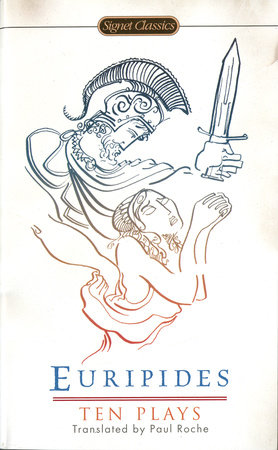


Euripides

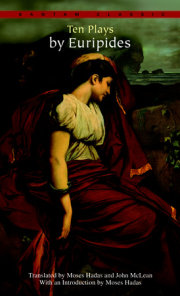
Ten Plays

Author Euripides
Translated by Paul Roche
Look inside
Mass Market Paperback
$7.95 US
4.13"W x 6.75"H x 1.25"D  
On sale Oct 01, 1998 | 608 Pages | 9780451527004
Grades 9-12 + AP/IB

See Additional Formats
A modern translation exclusive to signet

From perhaps the greatest of the ancient Greek playwrights comes this collection of plays, including Alcestis, Hippolytus, Ion, Electra, Iphigenia at Aulis, Iphigenia Among the Taurians, Medea, The Bacchae, The Trojan Women, and The Cyclops.


Little is known of the life of Euripides. He was born about 485 B.C. on the island of Salamis and may have begun a career as a painter before writing in the drama competitions in 455 B.C. During his lifetime his plays were often produced, but he won the Athenian drama prize only four times. He died in 406 B.C.

Euripides was a prolific writer, the author of some eighty-eight or more plays, of which nineteen have survived under his name. He was criticized by the conservatives of his time for introducing shabby heroes and immoral women into his plays, a practice that they considered degrading to the noble form of tragedy. However, audiences to whom his predecessors were cold and remote found Euripides direct and appealing.

Euripides became immensely popular after he died and his influence altered drama forever. Considered by George Bernard Shaw to be the greatest of the Greek dramatists, Euripides is now regarded by many as the originator of the dramatic sensibility that developed into what we call "modern" European drama. View titles by Euripides
Ten PlaysIntroduction
Translator's Preface

Alcestis
Hippolytus
Ion
Electra
Iphigenia at Aulis
Iphigenia Among the Taurians
Medea
The Bacchae
The Trojan Women
The Cyclops

Glossary of Classical Names

About

A modern translation exclusive to signet

From perhaps the greatest of the ancient Greek playwrights comes this collection of plays, including Alcestis, Hippolytus, Ion, Electra, Iphigenia at Aulis, Iphigenia Among the Taurians, Medea, The Bacchae, The Trojan Women, and The Cyclops.


Author

Little is known of the life of Euripides. He was born about 485 B.C. on the island of Salamis and may have begun a career as a painter before writing in the drama competitions in 455 B.C. During his lifetime his plays were often produced, but he won the Athenian drama prize only four times. He died in 406 B.C.

Euripides was a prolific writer, the author of some eighty-eight or more plays, of which nineteen have survived under his name. He was criticized by the conservatives of his time for introducing shabby heroes and immoral women into his plays, a practice that they considered degrading to the noble form of tragedy. However, audiences to whom his predecessors were cold and remote found Euripides direct and appealing.

Euripides became immensely popular after he died and his influence altered drama forever. Considered by George Bernard Shaw to be the greatest of the Greek dramatists, Euripides is now regarded by many as the originator of the dramatic sensibility that developed into what we call "modern" European drama. View titles by Euripides

Table of Contents

Ten PlaysIntroduction
Translator's Preface

Alcestis
Hippolytus
Ion
Electra
Iphigenia at Aulis
Iphigenia Among the Taurians
Medea
The Bacchae
The Trojan Women
The Cyclops

Glossary of Classical Names

Books for Black History Month

In honor of Black History Month this February, we are highlighting essential fiction and nonfiction for students, teachers, and parents to share and discuss this month and beyond. Join Penguin Random House Education in celebrating the contributions of Black authors and illustrators by exploring the titles here: BLACK HISTORY – MIDDLE SCHOOL BLACK HISTORY –

Read more