
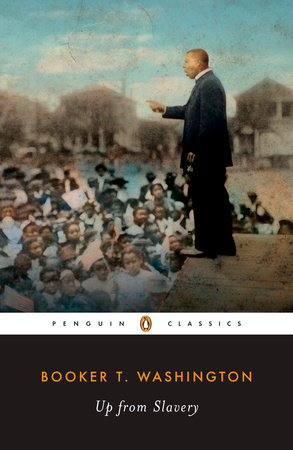

During his unchallenged reign as black America's foremost spokesman, former slave Booker T. Washington treaded a dangerous middle ground in a time of racial backlash and disfranchisement: as he publicly acquiesced to whites on issues of social equality, he fiercely exhorted blacks, through his national political machine, to unite and improve their lot. Though Washington worked ceaselessly, through many channels, to gain moral and financial support for his people and for his beloved Tuskegee Institute, Up from Slavery, his autobiography, helped him at these endeavours more than all other efforts combined. Vividly recounting Washington's life - his childhood as a slave, his struggle for education, his founding and presidency of the Tuskegee Institute, his meetings with the country's leaders, Up from Slavery reveals the conviction he held that the black man's salvation lay in education, industriousness and self-reliance. Louis R. Harlan's introduction fully assesses the impact of this simply written, anecdotal life story that bears the mark of a man of real courage, talent and dedication.
Booker T. Washington (1856–1915) was born a slave on a Virginia farm. Later freed, he headed and developed the Tuskegee Institute and became a leader in education. Widely considered a spokesman for his people, he emphasized social concern in three books as well as his autobiography, Up from Slavery. View titles by Booker T. Washington

About

During his unchallenged reign as black America's foremost spokesman, former slave Booker T. Washington treaded a dangerous middle ground in a time of racial backlash and disfranchisement: as he publicly acquiesced to whites on issues of social equality, he fiercely exhorted blacks, through his national political machine, to unite and improve their lot. Though Washington worked ceaselessly, through many channels, to gain moral and financial support for his people and for his beloved Tuskegee Institute, Up from Slavery, his autobiography, helped him at these endeavours more than all other efforts combined. Vividly recounting Washington's life - his childhood as a slave, his struggle for education, his founding and presidency of the Tuskegee Institute, his meetings with the country's leaders, Up from Slavery reveals the conviction he held that the black man's salvation lay in education, industriousness and self-reliance. Louis R. Harlan's introduction fully assesses the impact of this simply written, anecdotal life story that bears the mark of a man of real courage, talent and dedication.

Author

Booker T. Washington (1856–1915) was born a slave on a Virginia farm. Later freed, he headed and developed the Tuskegee Institute and became a leader in education. Widely considered a spokesman for his people, he emphasized social concern in three books as well as his autobiography, Up from Slavery. View titles by Booker T. Washington

Mental Health Awareness Month Resources

May is Mental Health Awareness Month and educators are increasingly aware that integrating social-emotional learning into the curriculum is critical if we want students to succeed both in and out of the classroom. Download the thematic educator guides on Teaching About Anxiety and Mindfulness and Teaching About Student Wellness. Explore our specially curated collections on

Read more

Books for Asian American, Native Hawaiian, and Pacific Islander Heritage Month

Each May, we honor the stories, histories, and cultures of Asian Americans, Native Hawaiians, and Pacific Islanders. Below is a selection of acclaimed fiction and nonfiction books by AANHPI creators to share with your students this month and throughout the year. AANHPI Creators – Middle School titles AANHPI Creators – High School titles .

Read more