How to be both

A novel

Author Ali Smith
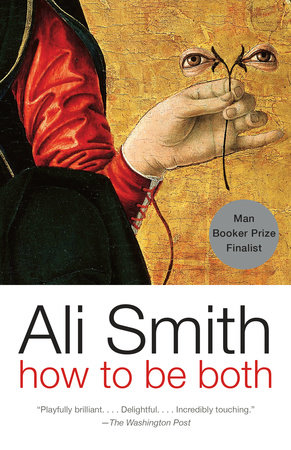
MAN BOOKER PRIZE FINALIST • A novel all about art's versatility, borrowing from painting’s fresco technique to make an original literary double-take.

"Cements Smith’s reputation as one of the finest and most innovative of our contemporary writers. By some divine alchemy, she is both funny and moving; she combines intellectual rigor with whimsy" —The Los Angeles Review of Books


One of the New York Times’s 100 Best Books of the 21st Century

How to be both is a fast-moving genre-bending conversation between forms, times, truths and fictions. There’s a Renaissance artist of the 1460s. There’s the child of a child of the 1960s. Two tales of love and injustice twist into a singular yarn where time gets timeless, structural gets playful, knowing gets mysterious, fictional gets real—and all life’s givens get given a second chance. Passionate, compassionate, vitally inventive and scrupulously playful, Ali Smith’s novels are like nothing else.

A NOTE TO THE READER:
Who says stories reach everybody in the same order?
This novel can be read in two ways, and the eBook provides you with both. You can choose which way to read the novel by simply clicking on one of two icons—CAMERA or EYES. The text is exactly the same in both versions; the narratives are just in a different order. 
 
The ebook is produced this way so that readers can randomly have different experiences reading the same text. So, depending on which icon you select, the book will read: EYES, CAMERA, or CAMERA, EYES. (Your friend may be reading it the other way around.) Enjoy the adventure. 
 
(Having both versions in the same file is intentional.)
© Christian Sinibaldi

ALI SMITH is the author of many works of fiction, including, most recently, SummerSpring, Winter, Autumn, Public library and other stories, and How to be both, which won the Baileys Women's Prize for Fiction, the Goldsmiths Prize, and the Costa Novel of the Year Award. Her work has four times been short-listed for the Man Booker Prize. Born in Inverness, Scotland, she lives in Cambridge, England.

View titles by Ali Smith
Consider this moral conundrum for a moment, George’s mother says to George who’s sitting in the front passenger seat.
 
Not says. Said. 
 
George’s mother is dead.
 
What moral conundrum? George says.
 
The passenger seat in the hire car is strange, being on the side the driver’s seat is on at home. This must be a bit like driving is, except without the actual, you know, driving.
 
Okay. You’re an artist, her mother says.
 
Am I? George says. Since when? And is that a moral conundrum? 
 
Ha ha, her mother says. Humour me. Imagine it. You’re an artist.
 
This conversation is happening last May, when George’s mother is still alive, obviously. She’s been dead since September. Now it’s January, to be more precise it’s just past midnight on New Year’s Eve, which means it has just become the year after the year in which George’s mother died.
 
George’s father is out. It is better than him being at home, standing maudlin in the kitchen or going round the house switching things off and on. Henry is asleep. She just went in and checked on him; he was dead to the world, though not as dead as the word dead literally means when it means, you know, dead.
 
This will be the first year her mother hasn’t been alive since the year her mother was born. That is so obvious that it is stupid even to think it and yet so terrible that you can’t not think it. Both at once.
 
Anyway George is spending the first minutes of the new year looking up the lyrics of an old song. Let’s Twist Again. Lyrics by Kal Mann. The words are pretty bad. Let’s twist again like we did last summer. Let’s twist again like we did last year. Then there’s a really bad rhyme, a rhyme that isn’t, properly speaking, even a rhyme.
 
Do you remember when
Things were really hummin’. 
 
Hummin’ doesn’t rhyme with summer, the line doesn’t end in a question mark, and is it meant to mean, literally, do you remember that time when things smelt really bad? 
 
Then Let’s twist again, twisting time is here. Or, as all the sites say, twistin’ time. 
 
At least they’ve used an apostrophe, the George from before her mother died says. 
 
I do not give a fuck about whether some site on the internet attends to grammatical correctness, the George from after says.
 
That before and after thing is about mourning, is what people keep saying. They keep talking about how grief has stages. There’s some dispute about how many stages of grief there are. There are three, or five, or some people say seven. 
 
It’s quite like the songwriter actually couldn’t be bothered to think of words. Maybe he was in one of the three, five or seven stages of mourning too. Stage nine (or twenty three or a hundred and twenty three or ad infinitum, because nothing will ever not be like this again): in this stage you will no longer be bothered with whether songwords mean anything. In fact you will hate almost all songs.
 
But George has to find a song to which you can do this specific dance.
 
It being so apparently contradictory and meaningless is no doubt a bonus. It will be precisely why the song sold so many copies and was such a big deal at the time. People like things not to be too meaningful.
 
Okay, I’m imagining, George in the passenger seat last May in Italy says at exactly the same time as George at home in England the following January stares at the meaninglessness of the words of an old song. Outside the car window Italy unfurls round and over them so hot and yellow it looks like it’s been sandblasted. In the back Henry snuffles lightly, his eyes closed, his mouth open. The band of the seatbelt is over his forehead because he is so small.
 
You’re an artist, her mother says, and you’re working on a project with a lot of other artists. And everybody on the project is getting the same amount, salary-wise. But you believe that what you’re doing is worth more than everyone on the project, including you, is getting paid. So you write a letter to the man who’s commissioned the work and you ask him to give you more money than everyone else is getting.
 
Am I worth more? George says. Am I better than the other artists?
 
Does that matter? her mother says. Is that what matters?
 
Is it me or is it the work that’s worth more? George says.
 
Good. Keep going, her mother says.
 
Is this real? George says. Is it hypothetical?
 
Does that matter? her mother says.
“Playfully brilliant. . . . Fantastically complex and incredibly touching. . . . This gender-blending, genre-blurring story, which was shortlisted for the Booker Prize, bounces across centuries, tossing off profound reflections on art and grief, without getting tangled in its own postmodern wires. It’s the sort of death-defying storytelling acrobatics that don’t seem entirely possible. . . . [A] swirling, panoramic vision of two women’s lives, separated by more than 500 years, impossibly connected by their fascination with the mystery of existence.”
—Ron Charles, The Washington Post

”Brilliant. . . . [How to be both] will one day join Virginia Woolf’s Orlando as a key text in understanding the fluidity of human life. Its power emerges from a dazzlingly twinned structure. . . . The desire to capture the past, Smith beautifully shows, is one of our essential ways of recognizing that it lives like the ghost of a painter or the memories of a dead mother. Art, whether it is a debased film or a hung fresco, or this magnificent book, reminds us of this lesson, so we can go back into the world to live.”
—John Freeman, The Boston Globe

“[A] sly and shimmering double helix of a novel. . . . The two parts of ‘How to be both’ have overlapping themes: the subversive power of art; what Martineau refers to as ‘sexual and gender ambiguities’; the hold of the dead on the living; and, of course, the figure of Francescho him/herself.”
—Christopher Benfey, The New York Times Book Review

“Dazzling. . . . A cutting-edge, even radical rumination on time, language, art, love. . . . Ali Smith is one of our most delightfully experimental writers, in the vein of Jeanette Winterson and even Virginia Woolf. By breaking the constraints of a traditional novel, she reinvents it as an exultant testament to creativity.”
—Michele Filgate, O, The Oprah Magazine

“[Smith] has outdone herself with How to be both. . . . To say that there's more than meets the eye in this terrific book is a gross understatement; it encompasses wonderful mothers, unconventional love and friendship, time, mortality, gender, the consolations of art and so much else. . . . Once again, Smith's affinity for beguiling oddballs and the pertly precocious rivals J.D Salinger's. . . . [A] gloriously inventive novel. . . . Ingeniously conceived.”
—Heller McAlpin, NPR

“Smith is endlessly artful, creating a work that feels infinite in its scope and intimate at the same time. . . . Smith has said that the duality of the novel, in which stories run over and alongside each other, is inspired by frescoes, which often bear layers of drawings underneath what’s visible. Among the questions she sets out to explore: how to be both male and female, how to laugh while in pain, how to know who you are and be able to escape that identity, how the past lives on in the present. . . . Perhaps, Smith seems to suggest, every circumstance or obstacle can be subverted and become its opposite at the same time.”
—Sophie Gilbert, The Atlantic

“Deft and mischievous, a novel of ideas that folds back on itself like the most playful sort of arabesque.”
—David L. Ulin, Los Angeles Times

About

MAN BOOKER PRIZE FINALIST • A novel all about art's versatility, borrowing from painting’s fresco technique to make an original literary double-take.

"Cements Smith’s reputation as one of the finest and most innovative of our contemporary writers. By some divine alchemy, she is both funny and moving; she combines intellectual rigor with whimsy" —The Los Angeles Review of Books


One of the New York Times’s 100 Best Books of the 21st Century

How to be both is a fast-moving genre-bending conversation between forms, times, truths and fictions. There’s a Renaissance artist of the 1460s. There’s the child of a child of the 1960s. Two tales of love and injustice twist into a singular yarn where time gets timeless, structural gets playful, knowing gets mysterious, fictional gets real—and all life’s givens get given a second chance. Passionate, compassionate, vitally inventive and scrupulously playful, Ali Smith’s novels are like nothing else.

A NOTE TO THE READER:
Who says stories reach everybody in the same order?
This novel can be read in two ways, and the eBook provides you with both. You can choose which way to read the novel by simply clicking on one of two icons—CAMERA or EYES. The text is exactly the same in both versions; the narratives are just in a different order. 
 
The ebook is produced this way so that readers can randomly have different experiences reading the same text. So, depending on which icon you select, the book will read: EYES, CAMERA, or CAMERA, EYES. (Your friend may be reading it the other way around.) Enjoy the adventure. 
 
(Having both versions in the same file is intentional.)

Author

© Christian Sinibaldi

ALI SMITH is the author of many works of fiction, including, most recently, SummerSpring, Winter, Autumn, Public library and other stories, and How to be both, which won the Baileys Women's Prize for Fiction, the Goldsmiths Prize, and the Costa Novel of the Year Award. Her work has four times been short-listed for the Man Booker Prize. Born in Inverness, Scotland, she lives in Cambridge, England.

View titles by Ali Smith

Excerpt

Consider this moral conundrum for a moment, George’s mother says to George who’s sitting in the front passenger seat.
 
Not says. Said. 
 
George’s mother is dead.
 
What moral conundrum? George says.
 
The passenger seat in the hire car is strange, being on the side the driver’s seat is on at home. This must be a bit like driving is, except without the actual, you know, driving.
 
Okay. You’re an artist, her mother says.
 
Am I? George says. Since when? And is that a moral conundrum? 
 
Ha ha, her mother says. Humour me. Imagine it. You’re an artist.
 
This conversation is happening last May, when George’s mother is still alive, obviously. She’s been dead since September. Now it’s January, to be more precise it’s just past midnight on New Year’s Eve, which means it has just become the year after the year in which George’s mother died.
 
George’s father is out. It is better than him being at home, standing maudlin in the kitchen or going round the house switching things off and on. Henry is asleep. She just went in and checked on him; he was dead to the world, though not as dead as the word dead literally means when it means, you know, dead.
 
This will be the first year her mother hasn’t been alive since the year her mother was born. That is so obvious that it is stupid even to think it and yet so terrible that you can’t not think it. Both at once.
 
Anyway George is spending the first minutes of the new year looking up the lyrics of an old song. Let’s Twist Again. Lyrics by Kal Mann. The words are pretty bad. Let’s twist again like we did last summer. Let’s twist again like we did last year. Then there’s a really bad rhyme, a rhyme that isn’t, properly speaking, even a rhyme.
 
Do you remember when
Things were really hummin’. 
 
Hummin’ doesn’t rhyme with summer, the line doesn’t end in a question mark, and is it meant to mean, literally, do you remember that time when things smelt really bad? 
 
Then Let’s twist again, twisting time is here. Or, as all the sites say, twistin’ time. 
 
At least they’ve used an apostrophe, the George from before her mother died says. 
 
I do not give a fuck about whether some site on the internet attends to grammatical correctness, the George from after says.
 
That before and after thing is about mourning, is what people keep saying. They keep talking about how grief has stages. There’s some dispute about how many stages of grief there are. There are three, or five, or some people say seven. 
 
It’s quite like the songwriter actually couldn’t be bothered to think of words. Maybe he was in one of the three, five or seven stages of mourning too. Stage nine (or twenty three or a hundred and twenty three or ad infinitum, because nothing will ever not be like this again): in this stage you will no longer be bothered with whether songwords mean anything. In fact you will hate almost all songs.
 
But George has to find a song to which you can do this specific dance.
 
It being so apparently contradictory and meaningless is no doubt a bonus. It will be precisely why the song sold so many copies and was such a big deal at the time. People like things not to be too meaningful.
 
Okay, I’m imagining, George in the passenger seat last May in Italy says at exactly the same time as George at home in England the following January stares at the meaninglessness of the words of an old song. Outside the car window Italy unfurls round and over them so hot and yellow it looks like it’s been sandblasted. In the back Henry snuffles lightly, his eyes closed, his mouth open. The band of the seatbelt is over his forehead because he is so small.
 
You’re an artist, her mother says, and you’re working on a project with a lot of other artists. And everybody on the project is getting the same amount, salary-wise. But you believe that what you’re doing is worth more than everyone on the project, including you, is getting paid. So you write a letter to the man who’s commissioned the work and you ask him to give you more money than everyone else is getting.
 
Am I worth more? George says. Am I better than the other artists?
 
Does that matter? her mother says. Is that what matters?
 
Is it me or is it the work that’s worth more? George says.
 
Good. Keep going, her mother says.
 
Is this real? George says. Is it hypothetical?
 
Does that matter? her mother says.

Praise

“Playfully brilliant. . . . Fantastically complex and incredibly touching. . . . This gender-blending, genre-blurring story, which was shortlisted for the Booker Prize, bounces across centuries, tossing off profound reflections on art and grief, without getting tangled in its own postmodern wires. It’s the sort of death-defying storytelling acrobatics that don’t seem entirely possible. . . . [A] swirling, panoramic vision of two women’s lives, separated by more than 500 years, impossibly connected by their fascination with the mystery of existence.”
—Ron Charles, The Washington Post

”Brilliant. . . . [How to be both] will one day join Virginia Woolf’s Orlando as a key text in understanding the fluidity of human life. Its power emerges from a dazzlingly twinned structure. . . . The desire to capture the past, Smith beautifully shows, is one of our essential ways of recognizing that it lives like the ghost of a painter or the memories of a dead mother. Art, whether it is a debased film or a hung fresco, or this magnificent book, reminds us of this lesson, so we can go back into the world to live.”
—John Freeman, The Boston Globe

“[A] sly and shimmering double helix of a novel. . . . The two parts of ‘How to be both’ have overlapping themes: the subversive power of art; what Martineau refers to as ‘sexual and gender ambiguities’; the hold of the dead on the living; and, of course, the figure of Francescho him/herself.”
—Christopher Benfey, The New York Times Book Review

“Dazzling. . . . A cutting-edge, even radical rumination on time, language, art, love. . . . Ali Smith is one of our most delightfully experimental writers, in the vein of Jeanette Winterson and even Virginia Woolf. By breaking the constraints of a traditional novel, she reinvents it as an exultant testament to creativity.”
—Michele Filgate, O, The Oprah Magazine

“[Smith] has outdone herself with How to be both. . . . To say that there's more than meets the eye in this terrific book is a gross understatement; it encompasses wonderful mothers, unconventional love and friendship, time, mortality, gender, the consolations of art and so much else. . . . Once again, Smith's affinity for beguiling oddballs and the pertly precocious rivals J.D Salinger's. . . . [A] gloriously inventive novel. . . . Ingeniously conceived.”
—Heller McAlpin, NPR

“Smith is endlessly artful, creating a work that feels infinite in its scope and intimate at the same time. . . . Smith has said that the duality of the novel, in which stories run over and alongside each other, is inspired by frescoes, which often bear layers of drawings underneath what’s visible. Among the questions she sets out to explore: how to be both male and female, how to laugh while in pain, how to know who you are and be able to escape that identity, how the past lives on in the present. . . . Perhaps, Smith seems to suggest, every circumstance or obstacle can be subverted and become its opposite at the same time.”
—Sophie Gilbert, The Atlantic

“Deft and mischievous, a novel of ideas that folds back on itself like the most playful sort of arabesque.”
—David L. Ulin, Los Angeles Times

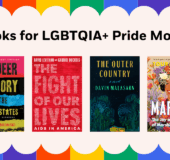
Books for LGBTQIA+ Pride Month

In June we celebrate Pride Month, which honors the 1969 Stonewall riots in Manhattan and highlights the accomplishments of those in the Lesbian, Gay, Bisexual, Transgender, Queer, Intersex, and Asexual + (LGBTQIA+) community. Browse our titles that celebrate LGBTQIA+ history, creators, and stories. LGBTQIA+ Fiction & Literature LGBTQIA+ History & Memoir

Read more