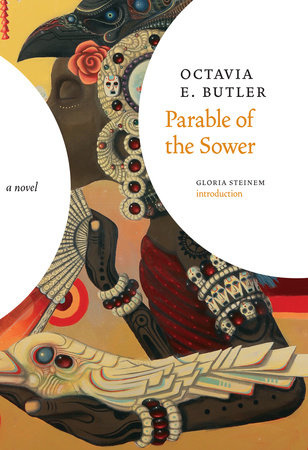
From the pioneering mind of Octavia E. Butler, Parable of the Sower is the radically speculative odyssey of a young Black woman in a post-apocalyptic America, and the community she cultivates despite the horrors of climate change and social inequality.

A New York Times Book of the Year
With a new introduction by Gloria Steinem


The time is 2025. The place is California, where small, walled communities must protect themselves from hordes of desperate scavengers and roaming bands of people addicted to a drug that activates an orgasmic desire to burn, rape, and murder.

When one small community is overrun, Lauren Olamina, an 18-year-old Black girl with the hereditary train of "hyperempathy"—which causes her to feel others’ pain as her own—sets off on foot along the dangerous coastal highways, moving north into the unknown.

Don't miss the second book the Parable duology, Parable of the Talents.
A writer who imagined the dark future we have chosen for ourselves in book after book, OCTAVIA E. BUTLER (1947–2006) is recognized as among the bravest and smartest of late twentieth century fiction writers. Her work includes the novels Parable of the Sower, Parable of the Talents, Fledgling, and the short story collection Bloodchild. A 1995 MacArthur Genius Award winner, Butler transcended the science fiction category even as she was awarded that community’s top prizes, including the Nebula and Hugo Awards. Not merely a prophet of dystopia, Butler also wrote of the ways human beings might subvert their dismal destiny. “I write about people who do extraordinary things,” Butler has said, “it just turns out that it was called science fiction.” Her novels and stories have reached readers of all ages, all races, and all religious and sexual persuasions. For years the only prominent African-American woman writing science fiction, Butler has encouraged many others to follow in her path. The Octavia E. Butler Scholarship was established in her memory in 2006, providing scholarships for young people of color to attend the Clarion Writers’ Workshop, where Butler herself began writing science fiction. View titles by Octavia E. Butler
  • RUNNERUP | 1995
    Locus Awards
  • NOMINEE | 1994
    Nebula Award
"Gripping ... poignant ... succeeds on multiple levels." —The New York Times Book Review

"Literate ... thoughtful. And a real gut-wrencher." —Washington Post Book World

"A powerful story of hope and faith in the midst of urban violence and decay ... Excellent science fiction and a parable of modern society." —Denver Post

"A prophetic odyssey." —Essence

"Simple, direct, and deeply felt." —Library Journal

"Artfully conceived and elegantly written." —Cleveland Plain Dealer

"There isn't a page in this vivid and frightening story that fails to grip the reader." —San Jose Mercury News

About

From the pioneering mind of Octavia E. Butler, Parable of the Sower is the radically speculative odyssey of a young Black woman in a post-apocalyptic America, and the community she cultivates despite the horrors of climate change and social inequality.

A New York Times Book of the Year
With a new introduction by Gloria Steinem


The time is 2025. The place is California, where small, walled communities must protect themselves from hordes of desperate scavengers and roaming bands of people addicted to a drug that activates an orgasmic desire to burn, rape, and murder.

When one small community is overrun, Lauren Olamina, an 18-year-old Black girl with the hereditary train of "hyperempathy"—which causes her to feel others’ pain as her own—sets off on foot along the dangerous coastal highways, moving north into the unknown.

Don't miss the second book the Parable duology, Parable of the Talents.

Author

A writer who imagined the dark future we have chosen for ourselves in book after book, OCTAVIA E. BUTLER (1947–2006) is recognized as among the bravest and smartest of late twentieth century fiction writers. Her work includes the novels Parable of the Sower, Parable of the Talents, Fledgling, and the short story collection Bloodchild. A 1995 MacArthur Genius Award winner, Butler transcended the science fiction category even as she was awarded that community’s top prizes, including the Nebula and Hugo Awards. Not merely a prophet of dystopia, Butler also wrote of the ways human beings might subvert their dismal destiny. “I write about people who do extraordinary things,” Butler has said, “it just turns out that it was called science fiction.” Her novels and stories have reached readers of all ages, all races, and all religious and sexual persuasions. For years the only prominent African-American woman writing science fiction, Butler has encouraged many others to follow in her path. The Octavia E. Butler Scholarship was established in her memory in 2006, providing scholarships for young people of color to attend the Clarion Writers’ Workshop, where Butler herself began writing science fiction. View titles by Octavia E. Butler

Awards

  • RUNNERUP | 1995
    Locus Awards
  • NOMINEE | 1994
    Nebula Award

Praise

"Gripping ... poignant ... succeeds on multiple levels." —The New York Times Book Review

"Literate ... thoughtful. And a real gut-wrencher." —Washington Post Book World

"A powerful story of hope and faith in the midst of urban violence and decay ... Excellent science fiction and a parable of modern society." —Denver Post

"A prophetic odyssey." —Essence

"Simple, direct, and deeply felt." —Library Journal

"Artfully conceived and elegantly written." —Cleveland Plain Dealer

"There isn't a page in this vivid and frightening story that fails to grip the reader." —San Jose Mercury News

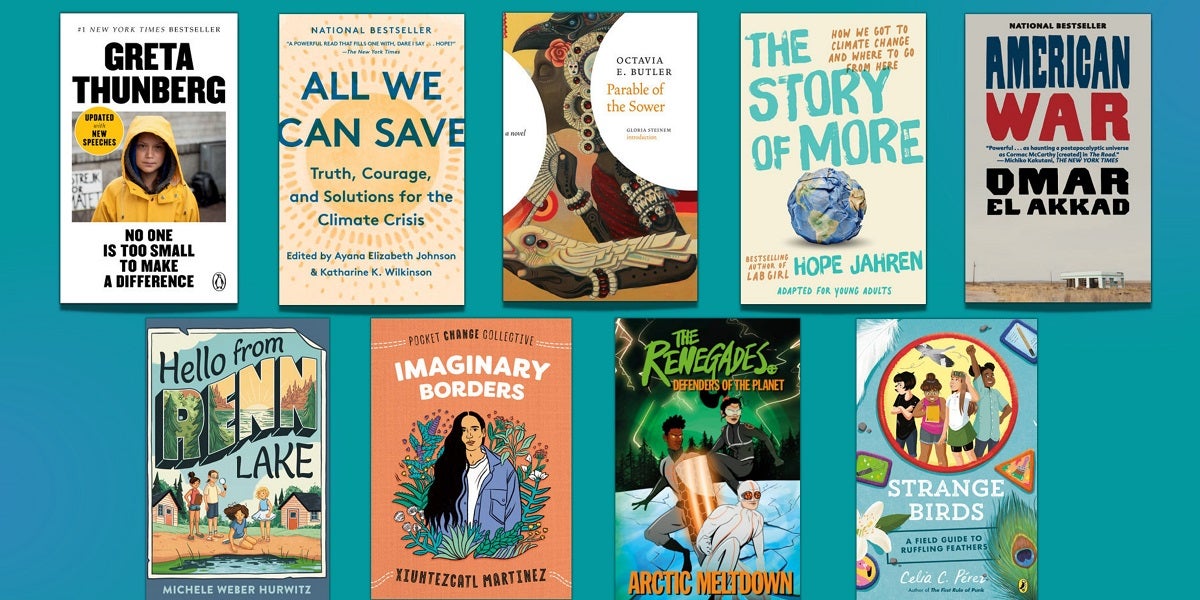
New Thematic Educator Guides: Teaching About Climate Change

Educating our students about climate change can literally change the future. According to a 2020 article in Proceedings of the National Academy of Sciences, educating young people about climate change could result in them making choices to decrease greenhouse gases, reduce pollution, and increase Green programs. While science class is a natural place to address

Read more