The Power of Pictures As the motion picture industry was just coming into existence, record numbers of Black Americans were being lynched throughout the United States. While pioneering filmmakers like inventor Thomas Edison worked to further the technology, craft, and business of motion pictures, civil rights leaders such as Ida B. Wells fought to keep Blacks from being murdered with impunity. While one segment of America had an eye on entertainment and commerce, another segment of the country struggled for equality and survival.
Edison was responsible for some of the earliest motion pictures, short films called “actualities,” which were precursors to the modern documentary and ran for less than thirty seconds. Edison’s actualities and other similar shorts didn’t have story lines, but even at its most primitive, moving pictures had the power to elicit thoughts and feelings from an audience.
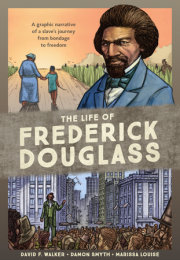
The first known moving pictures showing Black people were in a series of actualities produced in 1895, the same year that the abolitionist Frederick Douglass died. A former slave who became a respected author and outspoken advocate for civil rights, Douglass was the most photographed American of the nineteenth century. Douglass saw power in photography and used the medium to present himself with dignity, standing in direct and defiant contrast to the negative depictions of Black Americans in mass media. Douglass became one of the nation’s first major celebrities, speaking and writing at length about the art of “picture making.” He said that photography helped “the process by which man is able to invert his own subjective consciousness, into the objective form.”
Douglass believed that photography did not hold the biases and prejudices found in illustrations or cartoons and that through photos the only thing that could be revealed was the objective truth. The two things Douglass did not take into consideration, however, were the subjective perceptions of people looking at photographs—the prejudices they held in their hearts and minds—and what could happen if pictures were able to move.
Among the Edison-produced actualities were the films
A Watermelon Contest (1896) and
Native Woman Washing a Negro Baby in Nassau, B.I. (1903). And while these actualities had no story other than what the titles implied, movies like
Dancing Darkey Boy (1897) brought established prejudices and racist thinking into the emerging medium. Produced a year after the U.S. Supreme Court upheld segregation in the landmark case of
Plessy v. Ferguson, by simply adding the word “darkey” to the title,
Dancing Darkey Boy became more than just a simple moving picture; it became an extension of America’s systemic racism.
Not all the early moving pictures of the 1890s featuring Black people carried the same kind of bias and racism as
Dancing Darkey Boy or
A Watermelon Contest. Produced in 1898, and shot by the cameraman William “Daddy” Paley during the Spanish-American War,
Colored Troops Disembarking presented the Second Battalion of Colored Infantry marching down the gangplank of a steamship anchored in Havana Harbor and was praised for its positive presentation of African Americans. That same year saw the release of Lubin Manufacturing Company’s Cake Walk, featuring a dance routine by a group of vaudeville performers, and William Selig’s
Something Good—Negro Kiss. Considered lost until a print was discovered in 2017,
Something Good—Negro Kiss featured the vaudeville performers Saint Suttle and Gertie Brown and is believed to be the first on-screen kiss by African Americans.
Copyright © 2026 by David F. Walker. All rights reserved. No part of this excerpt may be reproduced or reprinted without permission in writing from the publisher.