Download high-resolution image Look inside
Listen to a clip from the audiobook
audio pause button
0:00
0:00

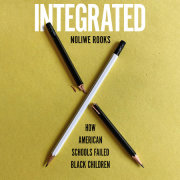
Integrated

How American Schools Failed Black Children

Look inside
Listen to a clip from the audiobook
audio pause button
0:00
0:00
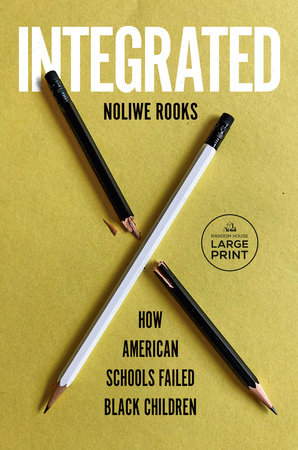
A powerful, incisive reckoning with the impacts of school desegregation that traces four generations of the author’s family to show how the implementation of integration decimated Black school systems and did much of the Black community a disservice

On May 17, 1954 the landmark case Brown v. Board of Education determined that racial segregation in schools was unconstitutional. Heralded as a massive victory for civil rights, the decision's goal was to give Black children equitable access to educational opportunities and clear a path to a better future. Yet in the years following the ruling, schools in predominantly Black neighborhoods were shuttered or saw their funding dwindle, Black educators were fired en masse, and Black children faced discrimination and violence from their white peers as they joined resource-rich schools that were ill-prepared for the influx of new students.

Award-winning interdisciplinary scholar of education and Black history Noliwe Rooks weaves together sociological data and cultural history to challenge the idea that integration was a boon for Black children. She tells the story of her grandparents, who were among the thousands of Black teachers fired following the Brown decision; her father, who was traumatized by his experiences at an almost exclusively-white school; her own experiences moving from a flourishing, racially diverse school to an underserved inner-city one; and finally her son and his Black peers, who over half-century after Brown still struggle with hostility and prejudice from white teachers and students alike. She also shows how present-day discrimination lawsuits directly stem from the mistakes made during integration.

At once assiduously researched and deeply engaging, Integrated tells the story of how education has remained both a tool for community progress and a seemingly inscrutable cultural puzzle. Rooks' deft hand turns the story of integration's past and future on it's head, and shows how we may better understand and support generations of students to come.
© Peter Goldberg
Noliwe Rooks is the chair of and a professor in Africana Studies at Brown University. Her work explores how race and gender both impact and are impacted by popular culture, social history, and political life in the United States. The author of six books and numerous articles, essays, and op-eds, Rooks has received research funding from the Ford Foundation, the Mellon Foundation, and the Woodrow Wilson School of Public and International Affairs, among others. She lectures frequently at colleges and universities around the country and is a regular contributor to popular outlets such as The New York Times, The Washington Post, The Chronicle of Higher Education, Time, and NPR. View titles by Noliwe Rooks
Chapter 1: “It Is Through Our Children We Will Be Free.”
In March 2021, less than a year after the American Medical Association acknowledged racism as a public health threat, a law firm specializing in civil rights filed the country’s first lawsuit claiming students had a right to an anti-­racist education. Filed on behalf of IntegrateNYC, a youth-­led organization that fights for equity in schools, the harms listed in the lawsuit were educational, psychological, emotional, spiritual, and physical: decrepit and unfit buildings compared to those in wealthier, less brown and Black schools; uncaring teachers; and curriculums that excluded positive mentions of people who looked like them. The lawsuit recounts how often Black and Latinx students encountered vermin such as rats and cockroaches in classrooms and hallways. One New York City student said they had been tasked by their teacher with killing a rat that made its way into the class. Students at a majority-­Black and low-­income school placed adjacent to a busy freeway described feeling regularly unfocused and numb and struggling to concentrate or speak in class over the constant din of traffic.


Over the years, the teenage plaintiffs said, recognition dawned that they were part of a school system that treated them, and those with Black and brown skin generally, differently than it treated those who were white or Asian—­they surmised because Black and brown people were somehow less worthy of cleanliness, safety, and care. “Children of color, in particular, experience and internalize the racism that is inherent in their educational experiences, which in turn hinders their educational achievement,” the lawsuit read. The type of racism the lawsuit described was not about an individual who held discriminatory thoughts and intent and inflicted both on students. It was not about a teacher who blocked a student’s access to a special program or a principal who meted out discipline haphazardly. It was about an entire system designed to deliver subpar educational experiences to children who are Black and Latinx. These students were talking about how racism and discrimination are embedded in the functioning of institutions and structures. They were describing structural racism, the “downstream consequences” of which strongly impact individual health, according to the author and psychiatrist Jonathan Metzel.


The term structural racism was coined in 1968 by Stokely Carmichael, the civil rights era activist who would later change his name to Kwame Ture. Speaking to a group of mental health practitioners and social workers at an annual professional meeting for social workers held in New York City, Ture urged them to stop focusing on racism in terms of individual actions or beliefs and instead see it as embedded in the way social structures and institutions functioned, as part of these systems’ DNA. “I don’t deal with the individual. I think it’s a copout when people talk about the individual,” he said. Instead, he pushed the group to devise a treatment plan for the silent, malignant racism of “established and respected forces in the society” that worked to maintain the status quo through structures such as zoning laws, economic policies, welfare bureaucracies, school systems, criminal law enforcement, and courts. Structural and institutionalized racism, he argued, “is less overt, far more subtle, less identifiable in terms of specific individuals committing the acts but is no less destructive of human life.”


Though ultimately dismissed, which prevented the issues it raised from being robustly debated in public, the IntegrateNYC lawsuit shed light on the widespread and harmful effects of systemic racism on the city’s segregated school system and its students. “If the government’s goal were to create a system of education that would replicate and in fact exacerbate pernicious racial inequality in the City, it would be challenging to design a more effective system than that which currently exists,” the lawsuit read. According to 2019 school diversity research on the New York City Council Website, between 2010 and 2019, close to 75 percent of Black and Latino/x students in New York City attended schools with less than 10 percent white students, while nearly 35 percent of white students attended schools with majority-­white populations. It’s the most segregated school system for Black students and the second most for Latinx students—­conditions that, the anti-­racism lawsuit lawyers argued, placed the comfort of white parents and politicians over the needs of non-­white children. It took more than fifty years, but public discourse had finally caught up to Ture.

Racism is a toxic force that harms most everything in its path, especially children sitting in school buildings. In fall 2020, the American Medical Association, as well as various schools, organizations, and local municipal agencies dedicated to public health, all proclaimed the racism inherent in educational, economic, and social disparities a health threat. In expressing support of the AMA, a researcher for the NAACP Legal Defense Fund put it more forcefully: “Structural racism is a public health crisis.” Given the stories of vermin-­infested classrooms, noise pollution, and unsound buildings in the lawsuit, it’s not a stretch to position segregated and underfunded schools as a health hazard, or structural racism as the culprit. The potential impacts of these conditions are well-­documented. According to a 2020 World Health Organization report, for instance, long-­term exposure to noise such as that endured by the students learning next to a busy freeway can contribute to a variety of health effects, including sleep disturbance, negative effects on the cardiovascular and metabolic system, and “cognitive and reading impairment” in children. And the U.S. Environmental Protection Agency has reported that proximity to vermin can lead to chronic absenteeism and asthma in students.

But perhaps the most pernicious and urgent impact of the systemic racism of the educational ecosystem is the mental turmoil and distress it causes in Black children. Children attending racially and economically segregated public schools say the curriculum, teachers, buildings, and expectations in their schools teach them that they have limited worth. Though they were told to study hard as a way out of the impacts of educational segregation, reading the lawsuits filed by students in New York City makes clear that differences in educational infrastructure, resources, quality, and outcomes, as well as recognition of the lack of music, art, and sports programs or quality materials, were shaping the self-­concepts of too many children, leading them to believe that, as one student plaintiff put it, “you don’t matter.” This is a refrain as easily muttered by students in schools in Trenton and similarly underperforming systems like Detroit, as well as by Black students in integrated and high-­performing districts like Princeton. The impact, the lawyers alleged, is that children who were not white internalized the racism that is inherent in their educational experiences and did not feel that they were equal. They wondered about a system that would treat them one way, and white and Asian students another way entirely. That is what structured racial inequality looks like. That is how it works. And it is hard to overcome. That is why the lawsuit demanded not only improved conditions and treatment in the schools but also, and most important, an educational experience that was actually and actively anti-­racist.

Of course, lawyers, teachers, and scholars have long known that there are negative health impacts associated with segregated, unequal, and underfunded schools. Indeed, in its Brown v. Board of Education decision, the Supreme Court cited research published by psychologists Mamie and Kenneth Clark in a 1950 paper concluding that “to separate [African American children] from others of similar age and qualifications solely because of their race generates a feeling of inferiority as to their status in the community that may affect their hearts and minds in a way unlikely ever to be undone.” Drs. Clark used four dolls, identical in every way except complexion, to test children’s racial perceptions. Their subjects, children between the ages of three and seven, were asked to identify both the race of the dolls and which color doll they preferred. Most of the children, including those who were Black, preferred the white doll and assigned it positive characteristics. The Clarks concluded that “prejudice, discrimination, and segregation” created a feeling of inferiority in Black children. In other words, racism had a negative impact on their mental health.

In 2019, a year before lawyers in New York filed their suit, students in Detroit expressed a similar sense of inferiority in a suit lambasting the state for the dismal conditions in the city’s schools and its failure to properly educate its students, with one sixteen-­year-­old student plaintiff saying her school environment “made me feel less than zero.” Ninety-­nine percent of children in Detroit are Black and Latino/x, and 93 percent of them attended schools with buildings so decrepit that during the 2016–­2017 school year, none met health and safety codes. One of the ways the student plaintiffs argued their case about having been failed by their school system was by showing that building temperatures in many schools regularly hovered at ninety degrees, no matter the season or temperature outside. On the first day of school in 2016, filings in the case showed, the heat was so bad that several teachers and students in multiple schools threw up, while others passed out. At the other end of the spectrum, when the schools were not overheated, these were so cold that, in the winter, teachers and students could see their breath hanging in the air when they exhaled. They wore coats, hats, scarves, gloves, and layers of clothes to withstand the low temperatures. In addition to the issues with the heating and cooling systems, the plaintiffs in the Detroit case provided evidence that mice, roaches, and “other vermin” regularly inhabited their classrooms. Teachers reported having grown accustomed to cleaning up rodent feces in the morning before their students arrived. In a few schools, the plaintiffs alleged, the infrastructure was in such disrepair and plumbing leaks so frequent that they spent class time keeping an eye on the ceilings to avoid falling tiles. Even the water in many buildings was found to have been so contaminated with pollutants that it was unsafe to drink. “I don’t feel anymore,” said one sixteen-­year-­old-­plaintiff. “It’s painful and infuriating. It tears you down piece by piece every single day.”

In some Detroit schools, class sizes swelled to fifty or sixty students in classrooms that contained enough desks for only forty, the supposed maximum. When that happened, students sat on the floor or stood along the walls when class was in session. Teacher shortages meant that on some days, students could spend up to three class periods per day in the gym. As a means of drawing attention to the lack of adequate staffing in her school, one teacher had taken to standing in front of the building handing out flyers urging parents to “ask your child if they had a teacher today.” In perhaps the most notable example of the severity of the teaching shortages in the district, at one school, “eighth-­grade students were put in charge of teaching seventh and eighth grade math classes for a month because no math teacher was available.” A student in one of these schools said, “It’s hard being a Black girl. They expect us to take this and not show any emotion. And if we do, WE are called crazy and WE are treated like we are crazy.” Talking to a documentary filmmaker about the case, one of the plaintiffs summed things up, saying, “You are left in the hands of people who have never been to your neighborhood, to your school, probably never having been to your city and they get to choose our education.”

Despite the many disturbing revelations included in the suit, at its core was a rudimentary demand: that students be taught basic reading comprehension. In 2019, the year the lawsuit was filed, less than a quarter of fourth-­grade and 39 percent of eighth-­grade students in Detroit public schools met even the basic standards of literacy as measured by the National Assessment of Educational Progress, while only 7 and 6 percent, respectively, tested as proficient—­significantly less than any other major city. Literacy levels have been a long-­standing problem in the city, with students consistently ranking lower than the national standard and proficiency rates hovering at or under 7 percent since 2009. “How can you expect someone, anyone in our country to be engaged in civics or the process at all if they can’t even read?” Helen Moore, the community activist who, along with students, caregivers, teachers, and administrators, first approached the law firm to file the literacy suit, told a reporter. “You can’t take part in our democracy unless you can read, so why is it that you have all these people working so hard to make sure Black students aren’t able to read?” Moore likened the neglect to the deliberate lack of educational access for enslaved Black children centuries earlier.
  • LONGLIST | 2026
    PEN/John Kenneth Galbraith Award for Nonfiction
"Integrated is a powerful, heartbreaking ode to the sustained determination of Black parents and their children to access quality education only to have that quest thwarted at every turn by governors, white parents, and judges. The personal and societal consequences are devastating. . . . Through memoir, data, studies, and histories, Rooks lays the responsibility where it rightfully belongs and demonstrates that systemic educational inequality is not sustainable for a viable democracy."
—Carol Anderson, New York Times bestselling author of White Rage: The Unspoken Truth of our Racial Divide

"An indispensable and brilliantly crafted examination of the impact of integration on Black children and the broader trajectory of America’s democracy. Rooks is one of the most admired scholars in education today, and her writing style is nothing short of magical. . . . With so much uncertainty facing education today, Integrated is a book that must find its way into the hands of every teacher, parent, and high school student, as it reminds us that the failures of the past do not have to become the permanent reality of our future."
—Bettina Love, New York Times bestselling author of Punished for Dreaming

"Rooks deftly sketches this lamentable, sobering history."
The Atlantic

"This illuminating study . . . is a paradigm-shifting reassessment of a milestone of the civil rights movement."
—Publishers Weekly
(starred)

"Education can be a great societal equalizer, but as Noliwe Rooks deftly shows in Integrated, the pathway to education’s promise is too often impeded by the ghosts of racial, ethnic, economic and geographic segregation haunting public schools in the United States. Viewed through the prism of Noliwe’s family story, this book is a powerful reminder of the children too often left out of our national discussions about the promise of public education."
—Soledad O’Brien, award-winning host of Matter of Fact with Soledad O’Brien

"As the son of two educators, I grew up knowing about the importance and value of education. I also saw firsthand the fight to bend the arc of educational justice so that all might benefit from the promise of public education. That battle is ongoing. A masterfully told story, Integrated is also a clarion call to action. It asks readers to confront the present reality of present-day ethnic, economic, language and race-based segregation."
—Van Jones, CNN host & New York Times bestselling author of Beyond the Messy Truth

"A vivid account of the emotional and economic damage done to generations of children of color. . . . A powerful and uncompromising indictment of the public school system."
—Kirkus Reviews

"This indictment of the American educational system and how it has routinely failed children of color and those from lower social and economic classes offers fresh insights and alternative interpretations of long-held assumptions….[Rooks’s] readable and well-reasoned account makes an eloquent plea for new solutions."
—Booklist

About

A powerful, incisive reckoning with the impacts of school desegregation that traces four generations of the author’s family to show how the implementation of integration decimated Black school systems and did much of the Black community a disservice

On May 17, 1954 the landmark case Brown v. Board of Education determined that racial segregation in schools was unconstitutional. Heralded as a massive victory for civil rights, the decision's goal was to give Black children equitable access to educational opportunities and clear a path to a better future. Yet in the years following the ruling, schools in predominantly Black neighborhoods were shuttered or saw their funding dwindle, Black educators were fired en masse, and Black children faced discrimination and violence from their white peers as they joined resource-rich schools that were ill-prepared for the influx of new students.

Award-winning interdisciplinary scholar of education and Black history Noliwe Rooks weaves together sociological data and cultural history to challenge the idea that integration was a boon for Black children. She tells the story of her grandparents, who were among the thousands of Black teachers fired following the Brown decision; her father, who was traumatized by his experiences at an almost exclusively-white school; her own experiences moving from a flourishing, racially diverse school to an underserved inner-city one; and finally her son and his Black peers, who over half-century after Brown still struggle with hostility and prejudice from white teachers and students alike. She also shows how present-day discrimination lawsuits directly stem from the mistakes made during integration.

At once assiduously researched and deeply engaging, Integrated tells the story of how education has remained both a tool for community progress and a seemingly inscrutable cultural puzzle. Rooks' deft hand turns the story of integration's past and future on it's head, and shows how we may better understand and support generations of students to come.

Author

© Peter Goldberg
Noliwe Rooks is the chair of and a professor in Africana Studies at Brown University. Her work explores how race and gender both impact and are impacted by popular culture, social history, and political life in the United States. The author of six books and numerous articles, essays, and op-eds, Rooks has received research funding from the Ford Foundation, the Mellon Foundation, and the Woodrow Wilson School of Public and International Affairs, among others. She lectures frequently at colleges and universities around the country and is a regular contributor to popular outlets such as The New York Times, The Washington Post, The Chronicle of Higher Education, Time, and NPR. View titles by Noliwe Rooks

Excerpt

Chapter 1: “It Is Through Our Children We Will Be Free.”
In March 2021, less than a year after the American Medical Association acknowledged racism as a public health threat, a law firm specializing in civil rights filed the country’s first lawsuit claiming students had a right to an anti-­racist education. Filed on behalf of IntegrateNYC, a youth-­led organization that fights for equity in schools, the harms listed in the lawsuit were educational, psychological, emotional, spiritual, and physical: decrepit and unfit buildings compared to those in wealthier, less brown and Black schools; uncaring teachers; and curriculums that excluded positive mentions of people who looked like them. The lawsuit recounts how often Black and Latinx students encountered vermin such as rats and cockroaches in classrooms and hallways. One New York City student said they had been tasked by their teacher with killing a rat that made its way into the class. Students at a majority-­Black and low-­income school placed adjacent to a busy freeway described feeling regularly unfocused and numb and struggling to concentrate or speak in class over the constant din of traffic.


Over the years, the teenage plaintiffs said, recognition dawned that they were part of a school system that treated them, and those with Black and brown skin generally, differently than it treated those who were white or Asian—­they surmised because Black and brown people were somehow less worthy of cleanliness, safety, and care. “Children of color, in particular, experience and internalize the racism that is inherent in their educational experiences, which in turn hinders their educational achievement,” the lawsuit read. The type of racism the lawsuit described was not about an individual who held discriminatory thoughts and intent and inflicted both on students. It was not about a teacher who blocked a student’s access to a special program or a principal who meted out discipline haphazardly. It was about an entire system designed to deliver subpar educational experiences to children who are Black and Latinx. These students were talking about how racism and discrimination are embedded in the functioning of institutions and structures. They were describing structural racism, the “downstream consequences” of which strongly impact individual health, according to the author and psychiatrist Jonathan Metzel.


The term structural racism was coined in 1968 by Stokely Carmichael, the civil rights era activist who would later change his name to Kwame Ture. Speaking to a group of mental health practitioners and social workers at an annual professional meeting for social workers held in New York City, Ture urged them to stop focusing on racism in terms of individual actions or beliefs and instead see it as embedded in the way social structures and institutions functioned, as part of these systems’ DNA. “I don’t deal with the individual. I think it’s a copout when people talk about the individual,” he said. Instead, he pushed the group to devise a treatment plan for the silent, malignant racism of “established and respected forces in the society” that worked to maintain the status quo through structures such as zoning laws, economic policies, welfare bureaucracies, school systems, criminal law enforcement, and courts. Structural and institutionalized racism, he argued, “is less overt, far more subtle, less identifiable in terms of specific individuals committing the acts but is no less destructive of human life.”


Though ultimately dismissed, which prevented the issues it raised from being robustly debated in public, the IntegrateNYC lawsuit shed light on the widespread and harmful effects of systemic racism on the city’s segregated school system and its students. “If the government’s goal were to create a system of education that would replicate and in fact exacerbate pernicious racial inequality in the City, it would be challenging to design a more effective system than that which currently exists,” the lawsuit read. According to 2019 school diversity research on the New York City Council Website, between 2010 and 2019, close to 75 percent of Black and Latino/x students in New York City attended schools with less than 10 percent white students, while nearly 35 percent of white students attended schools with majority-­white populations. It’s the most segregated school system for Black students and the second most for Latinx students—­conditions that, the anti-­racism lawsuit lawyers argued, placed the comfort of white parents and politicians over the needs of non-­white children. It took more than fifty years, but public discourse had finally caught up to Ture.

Racism is a toxic force that harms most everything in its path, especially children sitting in school buildings. In fall 2020, the American Medical Association, as well as various schools, organizations, and local municipal agencies dedicated to public health, all proclaimed the racism inherent in educational, economic, and social disparities a health threat. In expressing support of the AMA, a researcher for the NAACP Legal Defense Fund put it more forcefully: “Structural racism is a public health crisis.” Given the stories of vermin-­infested classrooms, noise pollution, and unsound buildings in the lawsuit, it’s not a stretch to position segregated and underfunded schools as a health hazard, or structural racism as the culprit. The potential impacts of these conditions are well-­documented. According to a 2020 World Health Organization report, for instance, long-­term exposure to noise such as that endured by the students learning next to a busy freeway can contribute to a variety of health effects, including sleep disturbance, negative effects on the cardiovascular and metabolic system, and “cognitive and reading impairment” in children. And the U.S. Environmental Protection Agency has reported that proximity to vermin can lead to chronic absenteeism and asthma in students.

But perhaps the most pernicious and urgent impact of the systemic racism of the educational ecosystem is the mental turmoil and distress it causes in Black children. Children attending racially and economically segregated public schools say the curriculum, teachers, buildings, and expectations in their schools teach them that they have limited worth. Though they were told to study hard as a way out of the impacts of educational segregation, reading the lawsuits filed by students in New York City makes clear that differences in educational infrastructure, resources, quality, and outcomes, as well as recognition of the lack of music, art, and sports programs or quality materials, were shaping the self-­concepts of too many children, leading them to believe that, as one student plaintiff put it, “you don’t matter.” This is a refrain as easily muttered by students in schools in Trenton and similarly underperforming systems like Detroit, as well as by Black students in integrated and high-­performing districts like Princeton. The impact, the lawyers alleged, is that children who were not white internalized the racism that is inherent in their educational experiences and did not feel that they were equal. They wondered about a system that would treat them one way, and white and Asian students another way entirely. That is what structured racial inequality looks like. That is how it works. And it is hard to overcome. That is why the lawsuit demanded not only improved conditions and treatment in the schools but also, and most important, an educational experience that was actually and actively anti-­racist.

Of course, lawyers, teachers, and scholars have long known that there are negative health impacts associated with segregated, unequal, and underfunded schools. Indeed, in its Brown v. Board of Education decision, the Supreme Court cited research published by psychologists Mamie and Kenneth Clark in a 1950 paper concluding that “to separate [African American children] from others of similar age and qualifications solely because of their race generates a feeling of inferiority as to their status in the community that may affect their hearts and minds in a way unlikely ever to be undone.” Drs. Clark used four dolls, identical in every way except complexion, to test children’s racial perceptions. Their subjects, children between the ages of three and seven, were asked to identify both the race of the dolls and which color doll they preferred. Most of the children, including those who were Black, preferred the white doll and assigned it positive characteristics. The Clarks concluded that “prejudice, discrimination, and segregation” created a feeling of inferiority in Black children. In other words, racism had a negative impact on their mental health.

In 2019, a year before lawyers in New York filed their suit, students in Detroit expressed a similar sense of inferiority in a suit lambasting the state for the dismal conditions in the city’s schools and its failure to properly educate its students, with one sixteen-­year-­old student plaintiff saying her school environment “made me feel less than zero.” Ninety-­nine percent of children in Detroit are Black and Latino/x, and 93 percent of them attended schools with buildings so decrepit that during the 2016–­2017 school year, none met health and safety codes. One of the ways the student plaintiffs argued their case about having been failed by their school system was by showing that building temperatures in many schools regularly hovered at ninety degrees, no matter the season or temperature outside. On the first day of school in 2016, filings in the case showed, the heat was so bad that several teachers and students in multiple schools threw up, while others passed out. At the other end of the spectrum, when the schools were not overheated, these were so cold that, in the winter, teachers and students could see their breath hanging in the air when they exhaled. They wore coats, hats, scarves, gloves, and layers of clothes to withstand the low temperatures. In addition to the issues with the heating and cooling systems, the plaintiffs in the Detroit case provided evidence that mice, roaches, and “other vermin” regularly inhabited their classrooms. Teachers reported having grown accustomed to cleaning up rodent feces in the morning before their students arrived. In a few schools, the plaintiffs alleged, the infrastructure was in such disrepair and plumbing leaks so frequent that they spent class time keeping an eye on the ceilings to avoid falling tiles. Even the water in many buildings was found to have been so contaminated with pollutants that it was unsafe to drink. “I don’t feel anymore,” said one sixteen-­year-­old-­plaintiff. “It’s painful and infuriating. It tears you down piece by piece every single day.”

In some Detroit schools, class sizes swelled to fifty or sixty students in classrooms that contained enough desks for only forty, the supposed maximum. When that happened, students sat on the floor or stood along the walls when class was in session. Teacher shortages meant that on some days, students could spend up to three class periods per day in the gym. As a means of drawing attention to the lack of adequate staffing in her school, one teacher had taken to standing in front of the building handing out flyers urging parents to “ask your child if they had a teacher today.” In perhaps the most notable example of the severity of the teaching shortages in the district, at one school, “eighth-­grade students were put in charge of teaching seventh and eighth grade math classes for a month because no math teacher was available.” A student in one of these schools said, “It’s hard being a Black girl. They expect us to take this and not show any emotion. And if we do, WE are called crazy and WE are treated like we are crazy.” Talking to a documentary filmmaker about the case, one of the plaintiffs summed things up, saying, “You are left in the hands of people who have never been to your neighborhood, to your school, probably never having been to your city and they get to choose our education.”

Despite the many disturbing revelations included in the suit, at its core was a rudimentary demand: that students be taught basic reading comprehension. In 2019, the year the lawsuit was filed, less than a quarter of fourth-­grade and 39 percent of eighth-­grade students in Detroit public schools met even the basic standards of literacy as measured by the National Assessment of Educational Progress, while only 7 and 6 percent, respectively, tested as proficient—­significantly less than any other major city. Literacy levels have been a long-­standing problem in the city, with students consistently ranking lower than the national standard and proficiency rates hovering at or under 7 percent since 2009. “How can you expect someone, anyone in our country to be engaged in civics or the process at all if they can’t even read?” Helen Moore, the community activist who, along with students, caregivers, teachers, and administrators, first approached the law firm to file the literacy suit, told a reporter. “You can’t take part in our democracy unless you can read, so why is it that you have all these people working so hard to make sure Black students aren’t able to read?” Moore likened the neglect to the deliberate lack of educational access for enslaved Black children centuries earlier.

Awards

  • LONGLIST | 2026
    PEN/John Kenneth Galbraith Award for Nonfiction

Praise

"Integrated is a powerful, heartbreaking ode to the sustained determination of Black parents and their children to access quality education only to have that quest thwarted at every turn by governors, white parents, and judges. The personal and societal consequences are devastating. . . . Through memoir, data, studies, and histories, Rooks lays the responsibility where it rightfully belongs and demonstrates that systemic educational inequality is not sustainable for a viable democracy."
—Carol Anderson, New York Times bestselling author of White Rage: The Unspoken Truth of our Racial Divide

"An indispensable and brilliantly crafted examination of the impact of integration on Black children and the broader trajectory of America’s democracy. Rooks is one of the most admired scholars in education today, and her writing style is nothing short of magical. . . . With so much uncertainty facing education today, Integrated is a book that must find its way into the hands of every teacher, parent, and high school student, as it reminds us that the failures of the past do not have to become the permanent reality of our future."
—Bettina Love, New York Times bestselling author of Punished for Dreaming

"Rooks deftly sketches this lamentable, sobering history."
The Atlantic

"This illuminating study . . . is a paradigm-shifting reassessment of a milestone of the civil rights movement."
—Publishers Weekly
(starred)

"Education can be a great societal equalizer, but as Noliwe Rooks deftly shows in Integrated, the pathway to education’s promise is too often impeded by the ghosts of racial, ethnic, economic and geographic segregation haunting public schools in the United States. Viewed through the prism of Noliwe’s family story, this book is a powerful reminder of the children too often left out of our national discussions about the promise of public education."
—Soledad O’Brien, award-winning host of Matter of Fact with Soledad O’Brien

"As the son of two educators, I grew up knowing about the importance and value of education. I also saw firsthand the fight to bend the arc of educational justice so that all might benefit from the promise of public education. That battle is ongoing. A masterfully told story, Integrated is also a clarion call to action. It asks readers to confront the present reality of present-day ethnic, economic, language and race-based segregation."
—Van Jones, CNN host & New York Times bestselling author of Beyond the Messy Truth

"A vivid account of the emotional and economic damage done to generations of children of color. . . . A powerful and uncompromising indictment of the public school system."
—Kirkus Reviews

"This indictment of the American educational system and how it has routinely failed children of color and those from lower social and economic classes offers fresh insights and alternative interpretations of long-held assumptions….[Rooks’s] readable and well-reasoned account makes an eloquent plea for new solutions."
—Booklist

Books for Black History Month

In honor of Black History Month this February, we are highlighting essential fiction and nonfiction for students, teachers, and parents to share and discuss this month and beyond. Join Penguin Random House Education in celebrating the contributions of Black authors and illustrators by exploring the titles here: BLACK HISTORY – MIDDLE SCHOOL BLACK HISTORY –

Read more