Download high-resolution image
Listen to a clip from the audiobook
audio pause button
0:00
0:00

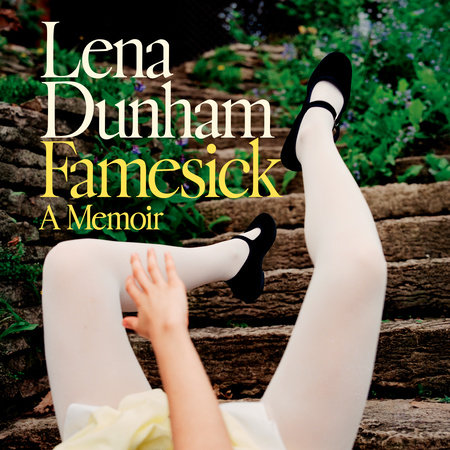
Famesick

A Memoir

Author Lena Dunham On Tour
Read by Lena Dunham On Tour
Listen to a clip from the audiobook
audio pause button
0:00
0:00
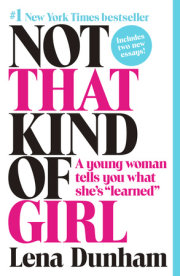
NATIONAL BESTSELLER • In this rowdy, frank reflection on illness, fame, sex, and everything in between, the remarkable mind behind the hit series Girls and the bestselling author of Not That Kind of Girl asks whether fulfilling her creative ambitions has been worth the pain.

For the last decade, as she’s spent countless hours in doctor’s waiting rooms searching for diagnoses, treatments, and relief, being the owner and operator of Lena Dunham’s body has felt, as she puts it, “like towing a wrecked car across town at midnight.” It’s not easy dragging a wrecked car anywhere, much less to the Met Gala while sewn into a gold lamé corset. Or to the set of the hit show that you—as a twenty-five-year-old—are writing, directing, producing, and starring in. Or to the White House, the Golden Globes, or your publicist’s office to discuss the latest internet disaster. But Dunham does it—even if it means interminable hospital stays, vomiting in the bathroom when she’s meant to be meeting Oprah, or terrifying those closest to her—because she can no longer tell the difference between fighting to do what she loves and being a servant to her own ambition. All the while, she is holding out for a love that can withstand her personal and public challenges and, more than anything, yearning to feel like herself again—if only she could remember who that self was.

As Dunham takes us through her journey, tracking her rise to fame—from selling the pilot of Girls to the present—in three acts, it becomes clear that the spotlight casts long shadows, distorting the relationships she once held dear and isolating everyone in its glare. When an endless supply of drugs can’t protect you from pain—and begins to control your every move—being famous doesn’t stand a chance against the darker corners of the human experience.

In Famesick, Dunham asks herself what the cost of fulfilling her dreams has really been, and whether it was worth it. What she finds is deeper than physical relief, and more lasting, as she learns to live with what she can’t change and turn her regrets into wisdom that can carry her forward, as she reconnects to what, and who, she loves.
© Charlotte Hadden
Lena Dunham is the creator of the critically acclaimed HBO series Girls, for which she also serves as executive producer, writer, and director. She has been nominated for eight Emmy awards and has won two Golden Globes, including Best Actress, for her work on Girls. She was the first woman to win the Directors Guild of America award for directorial achievement in comedy. Dunham has also written and directed two feature-length films (including Tiny Furniture in 2010) and is a frequent contributor to The New Yorker. She lives and works in Brooklyn, New York. View titles by Lena Dunham
Introduction

My name is Lena Dunham. That’s the name my mother gave me—and, as is the case in many of the most successful marriages, my father had little choice in the matter. Lena was the name of my great-grandmother, a woman who had emigrated from Russia with seven children, having already buried two or three depending on who tells it, with burns up and down her chubby arms from taking bread in and out of the oven. My mother’s name, Laurie, shared only the first letter of her grandmother’s—my own grandmother said it was Ashkenazi tradition, but in fact that only applied to living family members, and Lena was dead. In actuality, my grandparents wanted their daughters to have all-American names, untraceable names—Susie, Laurie, Bonnie. “Diminutive names,” my mother had always called them. “They weren’t strong names—they were names for little girls.” Laurie spent her teens irate about this, sure that as a Lena her life would have been full of lust and glamour, whereas a plain old Laurie was relegated to supporting character status, cute at best. My mother loved my father’s surname—loved that it was WASPy, older than America itself—unlike hers, Simmons, which had been changed at least four times over the generations to disguise its origins. There would be no middle name—she considered them vaguely frivolous. Just Lena Dunham. My mother said she chose it because it sounded like the name of someone who could be a movie star or a lawyer with an equal measure of success.

I carried the name through preschool, where I learned to write it early but didn’t understand that an E could only have three lines protruding from it and so insisted on dozens; through lower and middle school, where it took on the hard-to-shake stink of unpopularity, a name usually used in the context of hoping someone would not be joining the social function; and through high school and college, where I used it to sign endless poems about abstract feeling of disease. All these uses were natural, the classic stuff of growing up as oneself. It was only when the name entered the spin cycle of mass media—surprising my early classmates, my family, but no one more than myself—that it started to feel alien, like a character in a film I didn’t write. It became a mark of excellence, then a signifier of a certain kind of millennial absurdity, and—finally—a punch line that felt more like a slur.

By the time I was twenty-six, I trusted few people. I stopped wanting to share my name—one I had proudly offered as a child, announcing to anyone who would listen “I’m Lena Dunham. I have no middle name,” as if the very fact made me interesting. But now, I didn’t trust people to handle it with care, and I didn’t trust myself to protect it.

And so, at various times over the last decade, I have called myself Rose O’Neill, Renata Halpern, Lauri Reynolds, Ruth Stein—dealer’s choice of fake names to use when checking into a Hyatt, an assortment of people to be when sent a galley copy of something or, best case scenario, a free purse to my home address.

It wasn’t that anyone was out looking for me or that I’d be harassed if my location was discovered (although I have had a few brushes in my doorway with strangers to whom the name meant something other than what my mother intended—elegance, style, fortitude—and certainly something different than what it meant to me). It was that, when given the option, I simply preferred not to be myself. I had heard my given name so often, and in so many unnerving contexts, that it ceased to belong to me. It belonged to the world, to anyone who said it, and it had been perverted to mean something specific—and not altogether pleasant. To be Lauri to room service, to be Renata on my cable bill, to be Rose at rehab or Ruth at the hospital—offered freedom in a life that seemed, to anyone looking from the outside, to be lousy with it already. It was only me who had forgotten that I had the gift of choices. Maybe I was dead set on eliminating them.


I’ve spent much of the last ten years sick. Sometimes in a hospital bed, more often in my own bed, most often at work or out to dinner, pretending not to feel how I feel. It’s very hard to remember a time—aside from brief flashes of adrenaline on a set or on a date or at a fashion party where people are inadvertently dressed like kids in a school play about Greek gods—when being in my body didn’t feel like towing a wrecked car across town at midnight.

That’s not, strictly speaking, a truth that anyone wants to hear. The people who love you, with whom you feel safe, want more than anything for your pain to cease—and so you speak in language of “good days” and “the big picture,” leaning on the idea that the arc of the universe is always bending toward a better reality. With people you know less well, you say things like “it’s been a really good period” or “it’s totally manageable.” After a few ugly misfires, you learn to mold your approach to what they can take. As a result, the truth—the fears for what the future might look like, and whether there is one at all—is expressed mostly in the middle of sleepless nights, and only to your pillow. I’ve also spent the last ten years famous. Like my illness, that has vacillated in both intensity and quality—good days; okay periods; very, very bad ones. Unlike being sick, when you’re famous, nobody feels sorry for you. Fame is viewed, largely, as a condition of privilege that you’ve brought upon yourself. It’s your fault, and it’s also a good thing—even the bad parts seem, to those outside the experience, to be outweighed by the perks.

After all, the bedrock amusements of American life—pageants, talent shows, being discovered at the mall—are predicated on being chosen for glory.

Only my father, who has approached the response to me and my work with a visible disgust that confuses his friends but charms the shit out of me, seems to understand, and even applaud, that my relationship to fame, notoriety, and at times infamy has often been a toxic one. That’s not because of the kind of attention I’ve gotten—although much of it has been unpleasant—but because I didn’t start this looking to be a celebrity. Instead, I’m here because of an almost unrelenting drive toward selfexpression, which manifests as workaholism AND single-minded obsession that actually runs counter to a skilled manipulation of fame. My father is also the only person who really understands just how sick I’ve been. He has picked me up off the literal floor. He has brushed my hair when my stomach was too swollen to lift my arms. After endless days seated by my hospital bed in a suit and sneakers, legs crossed at the knee and The New York Times rustling in his callused hands, he has witnessed the monotony of illness and also the quick spikes of existential drama. Blood pressure plummets, nurses descend, and an hour later you’re drinking a Starbucks Frappuccino. Sometimes you leave the hospital cured, but sometimes you leave the hospital and head to rehab—hey, life comes at you fast.

“That doesn’t look comfy,” he says when my pillows are a mess, adjusting the landscape of the bed and then leaving the door ajar in case I call. I’ve experienced other kinds of devotion, but only he can make me feel that something so wrong—my body turning on me many years before it was meant to and right in sync with the public—might just be the most important story of my life.
“Like many, I did a big ‘Girls’ rewatch recently. I’m eager to get my hands on Lena Dunham’s new memoir, which features frank reflections on illness, creativity and fame—including her experiences writing, producing and starring in her iconic HBO show at just 25 years old.”Page Six

“Here, you’ll find resonance, relatability, and the kind of honesty that Dunham has made her creative signature.”Harper’s Bazaar

“A raw and vulnerable look at the intersection of public notoriety and chronic illness.”Parade

“Dunham contends with her ambition, relationships, and chronic physical and mental illnesses in the way only she can: with ruthless self-deprecation and a healthy dose of humor.”W Magazine

“If Too Much had you craving more Lena Dunham, you’re in luck. A reflection on fame, sex, illness and the messiness in between, Famesick traces Dunham’s rise from Girls to the present day, candidly examining the true cost of fame.”Fashion Journal

Famesick promises to be the kind of book we expect from Dunham: familiar yet surprising, funny yet bittersweet, vulnerable yet brave. For me at least, Dunham has always been the kind of girl who makes me sit up and pay attention, no matter what it is she wants to say.”Literary Hub

About

NATIONAL BESTSELLER • In this rowdy, frank reflection on illness, fame, sex, and everything in between, the remarkable mind behind the hit series Girls and the bestselling author of Not That Kind of Girl asks whether fulfilling her creative ambitions has been worth the pain.

For the last decade, as she’s spent countless hours in doctor’s waiting rooms searching for diagnoses, treatments, and relief, being the owner and operator of Lena Dunham’s body has felt, as she puts it, “like towing a wrecked car across town at midnight.” It’s not easy dragging a wrecked car anywhere, much less to the Met Gala while sewn into a gold lamé corset. Or to the set of the hit show that you—as a twenty-five-year-old—are writing, directing, producing, and starring in. Or to the White House, the Golden Globes, or your publicist’s office to discuss the latest internet disaster. But Dunham does it—even if it means interminable hospital stays, vomiting in the bathroom when she’s meant to be meeting Oprah, or terrifying those closest to her—because she can no longer tell the difference between fighting to do what she loves and being a servant to her own ambition. All the while, she is holding out for a love that can withstand her personal and public challenges and, more than anything, yearning to feel like herself again—if only she could remember who that self was.

As Dunham takes us through her journey, tracking her rise to fame—from selling the pilot of Girls to the present—in three acts, it becomes clear that the spotlight casts long shadows, distorting the relationships she once held dear and isolating everyone in its glare. When an endless supply of drugs can’t protect you from pain—and begins to control your every move—being famous doesn’t stand a chance against the darker corners of the human experience.

In Famesick, Dunham asks herself what the cost of fulfilling her dreams has really been, and whether it was worth it. What she finds is deeper than physical relief, and more lasting, as she learns to live with what she can’t change and turn her regrets into wisdom that can carry her forward, as she reconnects to what, and who, she loves.

Author

© Charlotte Hadden
Lena Dunham is the creator of the critically acclaimed HBO series Girls, for which she also serves as executive producer, writer, and director. She has been nominated for eight Emmy awards and has won two Golden Globes, including Best Actress, for her work on Girls. She was the first woman to win the Directors Guild of America award for directorial achievement in comedy. Dunham has also written and directed two feature-length films (including Tiny Furniture in 2010) and is a frequent contributor to The New Yorker. She lives and works in Brooklyn, New York. View titles by Lena Dunham

Excerpt

Introduction

My name is Lena Dunham. That’s the name my mother gave me—and, as is the case in many of the most successful marriages, my father had little choice in the matter. Lena was the name of my great-grandmother, a woman who had emigrated from Russia with seven children, having already buried two or three depending on who tells it, with burns up and down her chubby arms from taking bread in and out of the oven. My mother’s name, Laurie, shared only the first letter of her grandmother’s—my own grandmother said it was Ashkenazi tradition, but in fact that only applied to living family members, and Lena was dead. In actuality, my grandparents wanted their daughters to have all-American names, untraceable names—Susie, Laurie, Bonnie. “Diminutive names,” my mother had always called them. “They weren’t strong names—they were names for little girls.” Laurie spent her teens irate about this, sure that as a Lena her life would have been full of lust and glamour, whereas a plain old Laurie was relegated to supporting character status, cute at best. My mother loved my father’s surname—loved that it was WASPy, older than America itself—unlike hers, Simmons, which had been changed at least four times over the generations to disguise its origins. There would be no middle name—she considered them vaguely frivolous. Just Lena Dunham. My mother said she chose it because it sounded like the name of someone who could be a movie star or a lawyer with an equal measure of success.

I carried the name through preschool, where I learned to write it early but didn’t understand that an E could only have three lines protruding from it and so insisted on dozens; through lower and middle school, where it took on the hard-to-shake stink of unpopularity, a name usually used in the context of hoping someone would not be joining the social function; and through high school and college, where I used it to sign endless poems about abstract feeling of disease. All these uses were natural, the classic stuff of growing up as oneself. It was only when the name entered the spin cycle of mass media—surprising my early classmates, my family, but no one more than myself—that it started to feel alien, like a character in a film I didn’t write. It became a mark of excellence, then a signifier of a certain kind of millennial absurdity, and—finally—a punch line that felt more like a slur.

By the time I was twenty-six, I trusted few people. I stopped wanting to share my name—one I had proudly offered as a child, announcing to anyone who would listen “I’m Lena Dunham. I have no middle name,” as if the very fact made me interesting. But now, I didn’t trust people to handle it with care, and I didn’t trust myself to protect it.

And so, at various times over the last decade, I have called myself Rose O’Neill, Renata Halpern, Lauri Reynolds, Ruth Stein—dealer’s choice of fake names to use when checking into a Hyatt, an assortment of people to be when sent a galley copy of something or, best case scenario, a free purse to my home address.

It wasn’t that anyone was out looking for me or that I’d be harassed if my location was discovered (although I have had a few brushes in my doorway with strangers to whom the name meant something other than what my mother intended—elegance, style, fortitude—and certainly something different than what it meant to me). It was that, when given the option, I simply preferred not to be myself. I had heard my given name so often, and in so many unnerving contexts, that it ceased to belong to me. It belonged to the world, to anyone who said it, and it had been perverted to mean something specific—and not altogether pleasant. To be Lauri to room service, to be Renata on my cable bill, to be Rose at rehab or Ruth at the hospital—offered freedom in a life that seemed, to anyone looking from the outside, to be lousy with it already. It was only me who had forgotten that I had the gift of choices. Maybe I was dead set on eliminating them.


I’ve spent much of the last ten years sick. Sometimes in a hospital bed, more often in my own bed, most often at work or out to dinner, pretending not to feel how I feel. It’s very hard to remember a time—aside from brief flashes of adrenaline on a set or on a date or at a fashion party where people are inadvertently dressed like kids in a school play about Greek gods—when being in my body didn’t feel like towing a wrecked car across town at midnight.

That’s not, strictly speaking, a truth that anyone wants to hear. The people who love you, with whom you feel safe, want more than anything for your pain to cease—and so you speak in language of “good days” and “the big picture,” leaning on the idea that the arc of the universe is always bending toward a better reality. With people you know less well, you say things like “it’s been a really good period” or “it’s totally manageable.” After a few ugly misfires, you learn to mold your approach to what they can take. As a result, the truth—the fears for what the future might look like, and whether there is one at all—is expressed mostly in the middle of sleepless nights, and only to your pillow. I’ve also spent the last ten years famous. Like my illness, that has vacillated in both intensity and quality—good days; okay periods; very, very bad ones. Unlike being sick, when you’re famous, nobody feels sorry for you. Fame is viewed, largely, as a condition of privilege that you’ve brought upon yourself. It’s your fault, and it’s also a good thing—even the bad parts seem, to those outside the experience, to be outweighed by the perks.

After all, the bedrock amusements of American life—pageants, talent shows, being discovered at the mall—are predicated on being chosen for glory.

Only my father, who has approached the response to me and my work with a visible disgust that confuses his friends but charms the shit out of me, seems to understand, and even applaud, that my relationship to fame, notoriety, and at times infamy has often been a toxic one. That’s not because of the kind of attention I’ve gotten—although much of it has been unpleasant—but because I didn’t start this looking to be a celebrity. Instead, I’m here because of an almost unrelenting drive toward selfexpression, which manifests as workaholism AND single-minded obsession that actually runs counter to a skilled manipulation of fame. My father is also the only person who really understands just how sick I’ve been. He has picked me up off the literal floor. He has brushed my hair when my stomach was too swollen to lift my arms. After endless days seated by my hospital bed in a suit and sneakers, legs crossed at the knee and The New York Times rustling in his callused hands, he has witnessed the monotony of illness and also the quick spikes of existential drama. Blood pressure plummets, nurses descend, and an hour later you’re drinking a Starbucks Frappuccino. Sometimes you leave the hospital cured, but sometimes you leave the hospital and head to rehab—hey, life comes at you fast.

“That doesn’t look comfy,” he says when my pillows are a mess, adjusting the landscape of the bed and then leaving the door ajar in case I call. I’ve experienced other kinds of devotion, but only he can make me feel that something so wrong—my body turning on me many years before it was meant to and right in sync with the public—might just be the most important story of my life.

Praise

“Like many, I did a big ‘Girls’ rewatch recently. I’m eager to get my hands on Lena Dunham’s new memoir, which features frank reflections on illness, creativity and fame—including her experiences writing, producing and starring in her iconic HBO show at just 25 years old.”Page Six

“Here, you’ll find resonance, relatability, and the kind of honesty that Dunham has made her creative signature.”Harper’s Bazaar

“A raw and vulnerable look at the intersection of public notoriety and chronic illness.”Parade

“Dunham contends with her ambition, relationships, and chronic physical and mental illnesses in the way only she can: with ruthless self-deprecation and a healthy dose of humor.”W Magazine

“If Too Much had you craving more Lena Dunham, you’re in luck. A reflection on fame, sex, illness and the messiness in between, Famesick traces Dunham’s rise from Girls to the present day, candidly examining the true cost of fame.”Fashion Journal

Famesick promises to be the kind of book we expect from Dunham: familiar yet surprising, funny yet bittersweet, vulnerable yet brave. For me at least, Dunham has always been the kind of girl who makes me sit up and pay attention, no matter what it is she wants to say.”Literary Hub