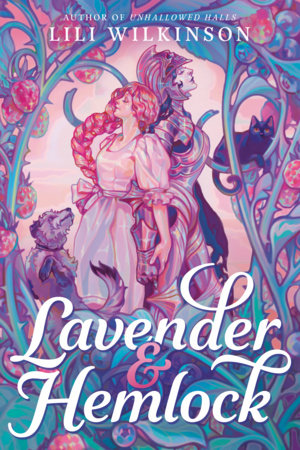
A housemaid's quiet life is disrupted when the arrival of a mysterious visitor causes her to question the nature of her seemingly-charming cottage home in this sweet, cozy romantasy with a dark heart.

Step into the Oubliette and forget your troubles....


Housemaid Tansy’s days are all the same. Her only duties are to tend to her charge, old Lady Aster, and take care of their quaint cottage home. The seaside house is charming, peaceful, and above all, isolated. Tansy can't remember the last time she left...or when she arrived.

Merit is a Carrion Knight. A servant of the dark entity the Unmaker, she has been raised to be a monster. But when she's wounded during a routine raid, she stumbles through a mysterious door… and finds herself tumbling into the Oubliette.

When the two meet, an instant connection forms, and a crack appears in Oubliette's perfect façade. As the bond between Merit and Tansy grows and powerful feelings rise to the surface, Tansy must question not only what she wants, but who she is. Because the origins of this charming world are darker than she could imagine—and the key to uncovering them might lie with Tansy herself.
Lili Wilkinson is the author of more than twenty novels published in Australia, including Pink, The Boundless Sublime, and the Bravepaw series. She established the Inky Awards at the Centre for Youth Literature, State Library of Victoria. Lili has a PhD in creative writing from the University of Melbourne and spends most of her time reading and writing books for teenagers. Her fantasy novels include A Hunger of Thorns, Deep Is the Fen, and Unhallowed Halls. View titles by Lili Wilkinson
1

Wild marjoram: Steep fresh leaves in boiling water for a tea that will dispel melancholy and bring peaceful sleep.


TANSY

The cat woke her up, batting an insistent paw against her cheek.

“You horrid thing,” she said to it. “I was having a perfectly nice dream.”

Gray light was only just starting to seep in through Tansy’s little attic window as she pulled on her linen shift and petticoat, the cat watching with luminous yellow eyes. A brown woolen overdress came next, the hem embroidered with a motif of marigolds, and a white kerchief for her neck and shoulders. Then a pinafore, white cap, and finally stockings and a pair of sturdy brown boots.

Outside, the goose honked.

The cat sprang from her bed with a gentle thump and led the way down the narrow attic stairs.

She lit the fire in the kitchen, her cold fingers clumsy as she fumbled for the tinderbox, then went out into the damp morning to fetch water from the well.

The cat followed her, picking its way carefully down the garden path. It was soot-­black, with lamplike golden eyes that seemed to watch her every move.

“Don’t you have anything better to do?” she asked it. “Surely there are mice to be caught.”

But she was grateful for the company.

Back inside, she filled the black iron kettle and hung it over the fire to boil for Lady Aster’s tea. She took the crock of milk from the larder and splashed a little into a dish for the cat, who lapped it up.

“You’re welcome,” she told it.

Lady Aster’s bedroom was stuffy, the dusty scent of old lavender hanging heavy in the air. Tansy set down the tea tray, and Lady Aster stirred in her sleep, muttering a word that sounded like anhelion.

“Good morning, ma’am,” Tansy said brightly.

She opened the curtains and the room was washed with morning light. It was very much an old lady’s room. Lace doilies. Mahogany furniture. Gilt-­framed paintings of flowers and meadows on the walls.

Nearly everything was embroidered with leaves and flowers and vines. It was how Tansy passed the long evenings after Lady Aster retired to her room, stitching neat rows of greenery on every piece of fabric she could find. She brought real plants inside from the garden too, flowers and bunches of herbs. Nothing made a house feel more like a home than the presence of green, growing things.

Lady Aster’s eyes snapped open, watery but sharp. She lay still for a moment, taking in her surroundings, then sat up in bed. Tansy rearranged the pillows to make her more com­fortable.

She was a small woman, shrunken with age. Her white hair was escaping from the silk bonnet that she slept in, giving her a slightly loose, disheveled look. Tansy poured the tea and passed the cup and saucer to Lady Aster, who took it with a brief nod of acknowledgment.

“I’ll be back in a bit to help you dress, ma’am,” Tansy said.

Lady Aster didn’t respond, just sipped her tea and stared moodily out the window at the grassy meadow and beyond it, to the wide stretch of ocean, gray in the morning light.

Tansy bobbed a curtsy and returned to the kitchen.

“She’s not feeling chatty today,” she remarked to the cat.

The cat ignored her.

Tansy sighed. “Neither are you.”

The chickens were more talkative, loudly demanding their breakfast while the goose watched from his nest under the blueberry bushes. Tansy fed them, then collected six brown speckled eggs from the nesting boxes and stowed them in the larder.

Bread dough on to proof. More water on the fire for washing up. Then back upstairs to help Lady Aster dress in her stiff dark brocade skirts and a whalebone corset. The old lady said nothing during the process, just sat still and expressionless as Tansy pulled her hair back into a rather severe-­looking bun and pinned a black velvet cap to her head.

“I don’t know who she’s trying to impress,” she told the cat later on as she stood on the back stoop, brushing her teeth with a rosemary twig dipped in salt. “It’s not like we ever get visitors.”

But she felt guilty for saying it.

The rest of the morning was spent on the usual chores. Tansy emptied the chamber pots. Scored the bread and popped it in the oven to bake, soaking the thick wooden oven door in water and sealing it with leftover bread dough. Once Lady Aster was settled in the sitting room, she went back upstairs and stripped the old lady’s bed and turned the horsehair mattress, sprinkling the underside with wormwood and chamomile to keep the bugs away. She took clean sheets from the linen chest and remade the bed, then carried the old sheets outside and washed them in a giant kettle with hot water and lye soap, bashed them with a wooden beetle, then spun the water out on a post before hanging everything out to dry on the hawthorn bushes.

She spent a pleasant half hour tending to her herb garden and gathering plants to make a new batch of dyes for her embroidery thread. Sorrel root and madder for red, buckthorn and agrimony for yellow, nettles for green, and privet berries mixed with alum and salt for blue. Toadweed made a better blue dye, but she only ever found it growing among the wild grasses that surrounded the cottage, and try as she might, Tansy had been unable to cultivate it in her own garden.

She had a melancholic feeling, like she was missing something she couldn’t quite remember. She felt that way quite often—­the feeling was so familiar to her it had become comforting.

The scent of crushed greenery seemed to fill her lungs, until she thought she might burst.

Perhaps she was homesick.

Don’t be ridiculous, said a dry voice inside her head. This is your home.

She put a fond hand on the gray stone of the cottage as she went back inside and heard the house creak gently in response.

She dusted Lady Aster’s collections. The shell room first, glass cases filled with seashells of all shapes, colors, and sizes. They were beautiful, but the room felt sad in a way Tansy couldn’t quite explain.

Probably because these shells all come from places you will never visit, the dry voice observed.

The doll room next, all painted faces and glass eyes, blank and expressionless and stuffed with sawdust. Tansy never lingered here—­the glass eyes seemed to follow her around the room.

A bell rang somewhere in the house.

It was time for Lady Aster’s walk.

The third collection would have to wait.

Lady Aster firmly believed in the power of fresh sea air, and every day she walked slowly from the front door to the garden gate and back again, an exercise that usually took all of three minutes.

Tansy accompanied her, although she wasn’t sure why her presence was necessary.

It’s certainly not for your conversational skills, the dry voice in her head commented.

Tansy cleared her throat. “It’s . . . it’s a lovely day,” she ventured.

Lady Aster sniffed dismissively. “Rain is coming,” she said.

Tansy gazed out at the blue skies and fluffy white clouds. It didn’t look like rain to her, but what did she know?

The goose burst from the blueberry bushes and rushed at Lady Aster, honking and beating its wings, its neck arched aggressively.

“Shoo!” Lady Aster said, frowning at it.

The goose hissed at her and bobbed its head, but it retreated back into the blueberry bushes, glaring at the old woman with baleful eyes.

Lady Aster pinched her lips and disappeared back into the house.

Tansy secretly admired the goose. She would never dream of standing up to Lady Aster like that.

Lady Aster always took a nap after her walk, retreating up the creaking stairs to her bedroom. She wouldn’t be back down until teatime.

Tansy finished the last of the dishes, hung up her apron, and slipped out the kitchen door into the afternoon sunshine.

The goose watched her from the blueberry bushes, but it didn’t hiss or honk. It always saved its rage for Lady Aster.

She followed the garden path to the low stone wall and opened the little white picket gate, which groaned on its hinges as she stepped through. She turned to look back at the stone cottage, draped in ivy. Windows peeked out from under the thatched roof, the bright green door cheerful and welcoming. It was utterly charming, surrounded by foxgloves and marigolds nodding in the breeze, under a brilliant blue sky populated with snowy clouds.

The cottage was her home. A comfortable home. A fine home.

So why does it feel so good to walk away from it? the voice inside her head asked.

The black cat leaped onto the gatepost to watch her go.

“I won’t be long,” she assured it.

It turned away from her and disdainfully licked a paw, as if to communicate that it did not care if she came or went.

The cliffs were a short walk away, through wild green grasses undulating in the strong ocean breeze. Buttercups, corn cockles, and harebells nodded their prettily colored heads, and a kind of peace spread through Tansy, despite the ache in her chest.

About

A housemaid's quiet life is disrupted when the arrival of a mysterious visitor causes her to question the nature of her seemingly-charming cottage home in this sweet, cozy romantasy with a dark heart.

Step into the Oubliette and forget your troubles....


Housemaid Tansy’s days are all the same. Her only duties are to tend to her charge, old Lady Aster, and take care of their quaint cottage home. The seaside house is charming, peaceful, and above all, isolated. Tansy can't remember the last time she left...or when she arrived.

Merit is a Carrion Knight. A servant of the dark entity the Unmaker, she has been raised to be a monster. But when she's wounded during a routine raid, she stumbles through a mysterious door… and finds herself tumbling into the Oubliette.

When the two meet, an instant connection forms, and a crack appears in Oubliette's perfect façade. As the bond between Merit and Tansy grows and powerful feelings rise to the surface, Tansy must question not only what she wants, but who she is. Because the origins of this charming world are darker than she could imagine—and the key to uncovering them might lie with Tansy herself.

Author

Lili Wilkinson is the author of more than twenty novels published in Australia, including Pink, The Boundless Sublime, and the Bravepaw series. She established the Inky Awards at the Centre for Youth Literature, State Library of Victoria. Lili has a PhD in creative writing from the University of Melbourne and spends most of her time reading and writing books for teenagers. Her fantasy novels include A Hunger of Thorns, Deep Is the Fen, and Unhallowed Halls. View titles by Lili Wilkinson

Excerpt

1

Wild marjoram: Steep fresh leaves in boiling water for a tea that will dispel melancholy and bring peaceful sleep.


TANSY

The cat woke her up, batting an insistent paw against her cheek.

“You horrid thing,” she said to it. “I was having a perfectly nice dream.”

Gray light was only just starting to seep in through Tansy’s little attic window as she pulled on her linen shift and petticoat, the cat watching with luminous yellow eyes. A brown woolen overdress came next, the hem embroidered with a motif of marigolds, and a white kerchief for her neck and shoulders. Then a pinafore, white cap, and finally stockings and a pair of sturdy brown boots.

Outside, the goose honked.

The cat sprang from her bed with a gentle thump and led the way down the narrow attic stairs.

She lit the fire in the kitchen, her cold fingers clumsy as she fumbled for the tinderbox, then went out into the damp morning to fetch water from the well.

The cat followed her, picking its way carefully down the garden path. It was soot-­black, with lamplike golden eyes that seemed to watch her every move.

“Don’t you have anything better to do?” she asked it. “Surely there are mice to be caught.”

But she was grateful for the company.

Back inside, she filled the black iron kettle and hung it over the fire to boil for Lady Aster’s tea. She took the crock of milk from the larder and splashed a little into a dish for the cat, who lapped it up.

“You’re welcome,” she told it.

Lady Aster’s bedroom was stuffy, the dusty scent of old lavender hanging heavy in the air. Tansy set down the tea tray, and Lady Aster stirred in her sleep, muttering a word that sounded like anhelion.

“Good morning, ma’am,” Tansy said brightly.

She opened the curtains and the room was washed with morning light. It was very much an old lady’s room. Lace doilies. Mahogany furniture. Gilt-­framed paintings of flowers and meadows on the walls.

Nearly everything was embroidered with leaves and flowers and vines. It was how Tansy passed the long evenings after Lady Aster retired to her room, stitching neat rows of greenery on every piece of fabric she could find. She brought real plants inside from the garden too, flowers and bunches of herbs. Nothing made a house feel more like a home than the presence of green, growing things.

Lady Aster’s eyes snapped open, watery but sharp. She lay still for a moment, taking in her surroundings, then sat up in bed. Tansy rearranged the pillows to make her more com­fortable.

She was a small woman, shrunken with age. Her white hair was escaping from the silk bonnet that she slept in, giving her a slightly loose, disheveled look. Tansy poured the tea and passed the cup and saucer to Lady Aster, who took it with a brief nod of acknowledgment.

“I’ll be back in a bit to help you dress, ma’am,” Tansy said.

Lady Aster didn’t respond, just sipped her tea and stared moodily out the window at the grassy meadow and beyond it, to the wide stretch of ocean, gray in the morning light.

Tansy bobbed a curtsy and returned to the kitchen.

“She’s not feeling chatty today,” she remarked to the cat.

The cat ignored her.

Tansy sighed. “Neither are you.”

The chickens were more talkative, loudly demanding their breakfast while the goose watched from his nest under the blueberry bushes. Tansy fed them, then collected six brown speckled eggs from the nesting boxes and stowed them in the larder.

Bread dough on to proof. More water on the fire for washing up. Then back upstairs to help Lady Aster dress in her stiff dark brocade skirts and a whalebone corset. The old lady said nothing during the process, just sat still and expressionless as Tansy pulled her hair back into a rather severe-­looking bun and pinned a black velvet cap to her head.

“I don’t know who she’s trying to impress,” she told the cat later on as she stood on the back stoop, brushing her teeth with a rosemary twig dipped in salt. “It’s not like we ever get visitors.”

But she felt guilty for saying it.

The rest of the morning was spent on the usual chores. Tansy emptied the chamber pots. Scored the bread and popped it in the oven to bake, soaking the thick wooden oven door in water and sealing it with leftover bread dough. Once Lady Aster was settled in the sitting room, she went back upstairs and stripped the old lady’s bed and turned the horsehair mattress, sprinkling the underside with wormwood and chamomile to keep the bugs away. She took clean sheets from the linen chest and remade the bed, then carried the old sheets outside and washed them in a giant kettle with hot water and lye soap, bashed them with a wooden beetle, then spun the water out on a post before hanging everything out to dry on the hawthorn bushes.

She spent a pleasant half hour tending to her herb garden and gathering plants to make a new batch of dyes for her embroidery thread. Sorrel root and madder for red, buckthorn and agrimony for yellow, nettles for green, and privet berries mixed with alum and salt for blue. Toadweed made a better blue dye, but she only ever found it growing among the wild grasses that surrounded the cottage, and try as she might, Tansy had been unable to cultivate it in her own garden.

She had a melancholic feeling, like she was missing something she couldn’t quite remember. She felt that way quite often—­the feeling was so familiar to her it had become comforting.

The scent of crushed greenery seemed to fill her lungs, until she thought she might burst.

Perhaps she was homesick.

Don’t be ridiculous, said a dry voice inside her head. This is your home.

She put a fond hand on the gray stone of the cottage as she went back inside and heard the house creak gently in response.

She dusted Lady Aster’s collections. The shell room first, glass cases filled with seashells of all shapes, colors, and sizes. They were beautiful, but the room felt sad in a way Tansy couldn’t quite explain.

Probably because these shells all come from places you will never visit, the dry voice observed.

The doll room next, all painted faces and glass eyes, blank and expressionless and stuffed with sawdust. Tansy never lingered here—­the glass eyes seemed to follow her around the room.

A bell rang somewhere in the house.

It was time for Lady Aster’s walk.

The third collection would have to wait.

Lady Aster firmly believed in the power of fresh sea air, and every day she walked slowly from the front door to the garden gate and back again, an exercise that usually took all of three minutes.

Tansy accompanied her, although she wasn’t sure why her presence was necessary.

It’s certainly not for your conversational skills, the dry voice in her head commented.

Tansy cleared her throat. “It’s . . . it’s a lovely day,” she ventured.

Lady Aster sniffed dismissively. “Rain is coming,” she said.

Tansy gazed out at the blue skies and fluffy white clouds. It didn’t look like rain to her, but what did she know?

The goose burst from the blueberry bushes and rushed at Lady Aster, honking and beating its wings, its neck arched aggressively.

“Shoo!” Lady Aster said, frowning at it.

The goose hissed at her and bobbed its head, but it retreated back into the blueberry bushes, glaring at the old woman with baleful eyes.

Lady Aster pinched her lips and disappeared back into the house.

Tansy secretly admired the goose. She would never dream of standing up to Lady Aster like that.

Lady Aster always took a nap after her walk, retreating up the creaking stairs to her bedroom. She wouldn’t be back down until teatime.

Tansy finished the last of the dishes, hung up her apron, and slipped out the kitchen door into the afternoon sunshine.

The goose watched her from the blueberry bushes, but it didn’t hiss or honk. It always saved its rage for Lady Aster.

She followed the garden path to the low stone wall and opened the little white picket gate, which groaned on its hinges as she stepped through. She turned to look back at the stone cottage, draped in ivy. Windows peeked out from under the thatched roof, the bright green door cheerful and welcoming. It was utterly charming, surrounded by foxgloves and marigolds nodding in the breeze, under a brilliant blue sky populated with snowy clouds.

The cottage was her home. A comfortable home. A fine home.

So why does it feel so good to walk away from it? the voice inside her head asked.

The black cat leaped onto the gatepost to watch her go.

“I won’t be long,” she assured it.

It turned away from her and disdainfully licked a paw, as if to communicate that it did not care if she came or went.

The cliffs were a short walk away, through wild green grasses undulating in the strong ocean breeze. Buttercups, corn cockles, and harebells nodded their prettily colored heads, and a kind of peace spread through Tansy, despite the ache in her chest.