
Penguin Random House, author portrait placeholder image

Brothers Grimm

Jacob Grimm (1785–1863) and Wilhelm Grimm (1786–1859) were born in Hanau, Germany. They both studied at Marburg, and from 1808 to 1829 mainly worked in Kassel as state-appointed librarians. Both brothers had been professors at Göttingen for several years when, in 1837, they became two of the seven leading Göttingen academics dismissed from their posts by the new king of Hanover for their liberal political views. In 1840, they were invited by King Frederick William IV of Prussia to settle in Berlin as members of the Academy of Sciences, and here they remained until their deaths. Jacob, one of Germany’s greatest scholars, is justly regarded as the founder of the scientific study of the German language and medieval German literature. His most monumental achievements were the Deutsche Grammatik (1819–1837) and, with his brother's assistance, the initiation of the great Deutsches Wörterbuch, the many volumes of which were not completed by later scholars until 1961, and which has become the equivalent of the Oxford English Dictionary. Between them, and often in collaboration, the Grimms were reponsible for pioneering work on medieval texts, the heroic epic, legends, and mythology; as well as for many other contributions to the study of ancient German culture. One of their most remarkable publications was the Kinder- und Hausmärchen (1812, with many subsequent editions), which remains to this day the most famous collection of folktales in the world.
Selected Tales
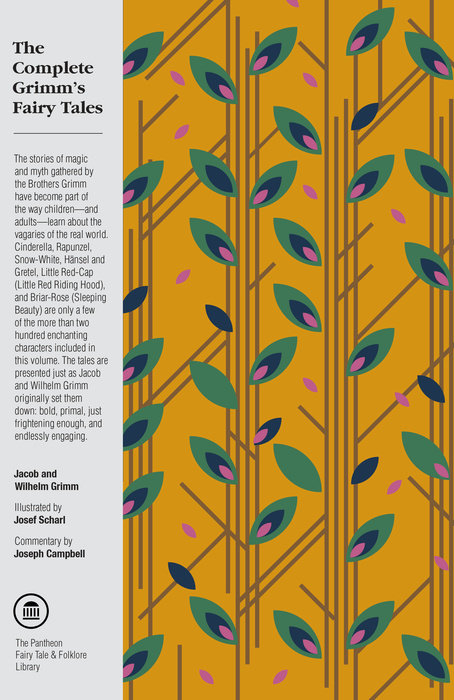
The Complete Grimm's Fairy Tales

Books

Selected Tales
The Complete Grimm's Fairy Tales

Books for Black History Month

In honor of Black History Month this February, we are highlighting essential fiction and nonfiction for students, teachers, and parents to share and discuss this month and beyond. Join Penguin Random House Education in celebrating the contributions of Black authors and illustrators by exploring the titles here: BLACK HISTORY – MIDDLE SCHOOL BLACK HISTORY –

Read more