
Joy Buolamwini, author portrait
© Naima Green

Joy Buolamwini

Dr. Joy Buolamwini is the founder of the Algorithmic Justice League, a groundbreaking researcher, and a renowned speaker. Her writing has been featured in publications such as Time, The New York Times, Harvard Business Review, and The Atlantic. As the Poet of Code, she creates art to illuminate the impact of artificial intelligence on society and advises world leaders on preventing AI harms. She is the recipient of numerous awards, including the Rhodes Scholarship, the inaugural Morals & Machines Prize, and the Technological Innovation Award from the Martin Luther King Jr. Center for Nonviolent Social Change. Her MIT research on facial recognition technologies is featured in the Emmy-nominated documentary Coded Bias. Born in Canada to Ghanaian immigrants, Buolamwini lives in Cambridge, Massachusetts.
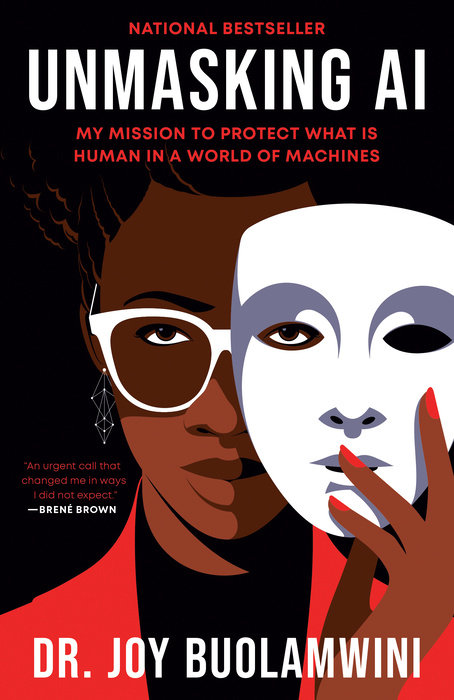
Unmasking AI

Books

Unmasking AI

Mental Health Awareness Month Resources

May is Mental Health Awareness Month and educators are increasingly aware that integrating social-emotional learning into the curriculum is critical if we want students to succeed both in and out of the classroom. Download the thematic educator guides on Teaching About Anxiety and Mindfulness and Teaching About Student Wellness. Explore our specially curated collections on

Read more

Books for Asian American, Native Hawaiian, and Pacific Islander Heritage Month

Each May, we honor the stories, histories, and cultures of Asian Americans, Native Hawaiians, and Pacific Islanders. Below is a selection of acclaimed fiction and nonfiction books by AANHPI creators to share with your students this month and throughout the year. AANHPI Creators – Middle School titles AANHPI Creators – High School titles .

Read more

New Thematic Educator Guides: Teaching Media Literacy

The COVID-19 global pandemic forever changed the way humans interact with information and with each other. Social media saved us from disconnection, but it also provided an opportunity for the dissemination of disinformation, the rise of polarization, and the distrust of traditional news media. Amidst concerns over children’s mental health and internet communication, many state

Read more