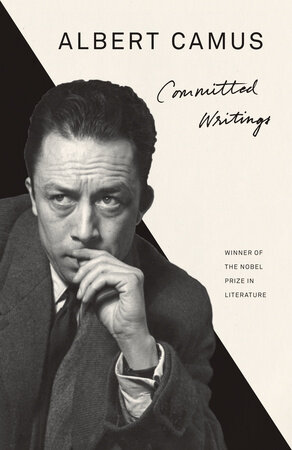

Committed Writings

Look inside
This collection includes Albert Camus’s most influential and enduring political writings, reorganized and recontextualized, with a foreword by Camus scholar Alice Kaplan.

Perhaps the most important philosopher of the twentieth century, Albert Camus (1913–1960), winner of the Nobel Prize in Literature, is more relevant today than ever before. Committed Writing brings together, for the first time, thematically-linked essays from across Camus’s writing career that reflect the scope of his political preoccupations. Featuring a foreword by acclaimed Camus scholar Alice Kaplan (author of Looking for the Stranger), this volume will introduce a new generation of readers to this cultural icon.
 
“A focused collection of the political and moral writings and speeches by the Nobel laureate. After a fresh foreword by Camus scholar Alice Kaplan, the compilation begins with four letters Camus published during World War II. . . . The longest piece is “Reflections on the Guillotine” (1957), which describes and condemns capital punishment, employing logic, passion, grim detail, and skillful prose. . . . In the first [Nobel Speech], Camus is humble and grateful and talks passionately about the significance of his art in his life. The second explores the idea of realism in literature—and how absolute realism is impossible. . . . The author ends by saying that truth should be the aim of the artist. Throughout, Camus’ talent, humor, and passion glisten like rare jewels.” —Kirkus Reviews 
Born in Algeria in 1913, ALBERT CAMUS published The Stranger--now one of the most widely read novels of this century--in 1942. He was awarded the Nobel Prize in Literature in 1957. On January 4, 1960, he was killed in a car accident. View titles by Albert Camus
"A focused collection of the political and moral writings and speeches by the Nobel laureate. After a fresh foreword by Camus scholar Alice Kaplan, the compilation begins with four letters Camus published during World War II . . . The longest piece is “Reflections on the Guillotine” (1957), which describes and condemns capital punishment, employing logic, passion, grim detail, and skillful prose . . . In the first [Nobel Speech], Camus is humble and grateful and talks passionately about the significance of his art in his life. The second explores the idea of realism in literature—and how absolute realism is impossible . . . The author ends by saying that truth should be the aim of the artist. Throughout, Camus’ talent, humor, and passion glisten like rare jewels." —Kirkus Reviews 

About

This collection includes Albert Camus’s most influential and enduring political writings, reorganized and recontextualized, with a foreword by Camus scholar Alice Kaplan.

Perhaps the most important philosopher of the twentieth century, Albert Camus (1913–1960), winner of the Nobel Prize in Literature, is more relevant today than ever before. Committed Writing brings together, for the first time, thematically-linked essays from across Camus’s writing career that reflect the scope of his political preoccupations. Featuring a foreword by acclaimed Camus scholar Alice Kaplan (author of Looking for the Stranger), this volume will introduce a new generation of readers to this cultural icon.
 
“A focused collection of the political and moral writings and speeches by the Nobel laureate. After a fresh foreword by Camus scholar Alice Kaplan, the compilation begins with four letters Camus published during World War II. . . . The longest piece is “Reflections on the Guillotine” (1957), which describes and condemns capital punishment, employing logic, passion, grim detail, and skillful prose. . . . In the first [Nobel Speech], Camus is humble and grateful and talks passionately about the significance of his art in his life. The second explores the idea of realism in literature—and how absolute realism is impossible. . . . The author ends by saying that truth should be the aim of the artist. Throughout, Camus’ talent, humor, and passion glisten like rare jewels.” —Kirkus Reviews 

Author

Born in Algeria in 1913, ALBERT CAMUS published The Stranger--now one of the most widely read novels of this century--in 1942. He was awarded the Nobel Prize in Literature in 1957. On January 4, 1960, he was killed in a car accident. View titles by Albert Camus

Praise

"A focused collection of the political and moral writings and speeches by the Nobel laureate. After a fresh foreword by Camus scholar Alice Kaplan, the compilation begins with four letters Camus published during World War II . . . The longest piece is “Reflections on the Guillotine” (1957), which describes and condemns capital punishment, employing logic, passion, grim detail, and skillful prose . . . In the first [Nobel Speech], Camus is humble and grateful and talks passionately about the significance of his art in his life. The second explores the idea of realism in literature—and how absolute realism is impossible . . . The author ends by saying that truth should be the aim of the artist. Throughout, Camus’ talent, humor, and passion glisten like rare jewels." —Kirkus Reviews 

Books for Black History Month

In honor of Black History Month this February, we are highlighting essential fiction and nonfiction for students, teachers, and parents to share and discuss this month and beyond. Join Penguin Random House Education in celebrating the contributions of Black authors and illustrators by exploring the titles here: BLACK HISTORY – MIDDLE SCHOOL BLACK HISTORY –

Read more