



























Happy Death

Look inside
Paperback
$17.00 US
5.15"W x 7.99"H x 0.61"D  
On sale Aug 29, 1995 | 208 Pages | 9780679764007
Grades AP/IB

See Additional Formats
Winner of the Nobel Prize 

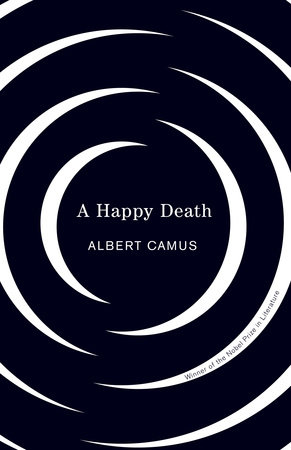
Camus wrote A Happy Death, his first novel, when he was in his early twenties. In it Camus laid the foundation for The Stranger, focusing in both works on an Algerian clerk who kills a man in cold blood. He also revealed himself to an extent that he never would in his later fiction. For if A Happy Death is the study of a rule-bound being shattering the fetters of his existence, it is also a remarkably candid portrait of its author as a young man. As the novel follows the protagonist, Patrice Mersault, to his victim’s house—and then, fleeing, in a journey that takes him through states of exile, hedonism, privation, and death—it gives us a glimpse into the imagination of one of the great writers of the twentieth century. Translated from the French by Richard Howard.
ALBERT CAMUS was born in Algeria in 1913. He spent the early years of his life in North Africa, where he became a journalist. During World War II, he was one of the leading writers of the French Resistance and an editor of Combat, an underground newspaper he helped found. His fiction, including The Stranger, The Plague, The Fall, and Exile and the Kingdom; his philosophical essays The Myth of Sisyphus and The Rebel and his plays The Just Assassins, The Misunderstanding, and Caligula have assured his preeminent position in modern literature and philosophy. In 1957, Camus was awarded the Nobel Prize in Literature. On January 4, 1960, he was killed in a car accident. View titles by Albert Camus
  • WINNER | 1957
    Nobel Prize

About

Winner of the Nobel Prize 

Camus wrote A Happy Death, his first novel, when he was in his early twenties. In it Camus laid the foundation for The Stranger, focusing in both works on an Algerian clerk who kills a man in cold blood. He also revealed himself to an extent that he never would in his later fiction. For if A Happy Death is the study of a rule-bound being shattering the fetters of his existence, it is also a remarkably candid portrait of its author as a young man. As the novel follows the protagonist, Patrice Mersault, to his victim’s house—and then, fleeing, in a journey that takes him through states of exile, hedonism, privation, and death—it gives us a glimpse into the imagination of one of the great writers of the twentieth century. Translated from the French by Richard Howard.

Author

ALBERT CAMUS was born in Algeria in 1913. He spent the early years of his life in North Africa, where he became a journalist. During World War II, he was one of the leading writers of the French Resistance and an editor of Combat, an underground newspaper he helped found. His fiction, including The Stranger, The Plague, The Fall, and Exile and the Kingdom; his philosophical essays The Myth of Sisyphus and The Rebel and his plays The Just Assassins, The Misunderstanding, and Caligula have assured his preeminent position in modern literature and philosophy. In 1957, Camus was awarded the Nobel Prize in Literature. On January 4, 1960, he was killed in a car accident. View titles by Albert Camus

Awards

  • WINNER | 1957
    Nobel Prize