
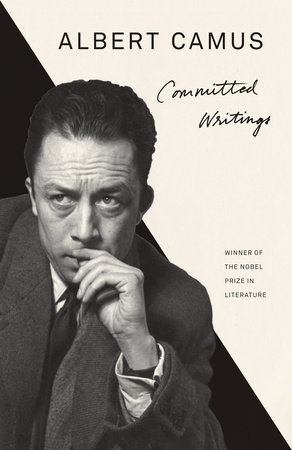
The Nobel Prize winner's most influential and enduring political writings, newly curated and introduced by acclaimed Camus scholar Alice Kaplan.

Albert Camus (1913-1960) is unsurpassed among writers for a body of work that animates the wonder and absurdity of existence. Committed Writings brings together, for the first time, thematically-linked essays from across Camus's writing career that reflect the scope of his political thought. This pivotal collection embodies Camus's radical and unwavering commitment to upholding human rights, resisting fascism, and creating art in the service of justice.
ALBERT CAMUS was born in Algeria in 1913. He spent the early years of his life in North Africa, where he became a journalist. During World War II, he was one of the leading writers of the French Resistance and an editor of Combat, an underground newspaper he helped found. His fiction, including The Stranger, The Plague, The Fall, and Exile and the Kingdom; his philosophical essays The Myth of Sisyphus and The Rebel and his plays The Just Assassins, The Misunderstanding, and Caligula have assured his preeminent position in modern literature and philosophy. In 1957, Camus was awarded the Nobel Prize in Literature. On January 4, 1960, he was killed in a car accident. View titles by Albert Camus
"A focused collection of the political and moral writings and speeches by the Nobel laureate. After a fresh foreword by Camus scholar Alice Kaplan, the compilation begins with four letters Camus published during World War II . . . The longest piece is “Reflections on the Guillotine” (1957), which describes and condemns capital punishment, employing logic, passion, grim detail, and skillful prose . . . In the first [Nobel Speech], Camus is humble and grateful and talks passionately about the significance of his art in his life. The second explores the idea of realism in literature—and how absolute realism is impossible . . . The author ends by saying that truth should be the aim of the artist. Throughout, Camus’ talent, humor, and passion glisten like rare jewels." —Kirkus Reviews 

About

The Nobel Prize winner's most influential and enduring political writings, newly curated and introduced by acclaimed Camus scholar Alice Kaplan.

Albert Camus (1913-1960) is unsurpassed among writers for a body of work that animates the wonder and absurdity of existence. Committed Writings brings together, for the first time, thematically-linked essays from across Camus's writing career that reflect the scope of his political thought. This pivotal collection embodies Camus's radical and unwavering commitment to upholding human rights, resisting fascism, and creating art in the service of justice.

Author

ALBERT CAMUS was born in Algeria in 1913. He spent the early years of his life in North Africa, where he became a journalist. During World War II, he was one of the leading writers of the French Resistance and an editor of Combat, an underground newspaper he helped found. His fiction, including The Stranger, The Plague, The Fall, and Exile and the Kingdom; his philosophical essays The Myth of Sisyphus and The Rebel and his plays The Just Assassins, The Misunderstanding, and Caligula have assured his preeminent position in modern literature and philosophy. In 1957, Camus was awarded the Nobel Prize in Literature. On January 4, 1960, he was killed in a car accident. View titles by Albert Camus

Praise

"A focused collection of the political and moral writings and speeches by the Nobel laureate. After a fresh foreword by Camus scholar Alice Kaplan, the compilation begins with four letters Camus published during World War II . . . The longest piece is “Reflections on the Guillotine” (1957), which describes and condemns capital punishment, employing logic, passion, grim detail, and skillful prose . . . In the first [Nobel Speech], Camus is humble and grateful and talks passionately about the significance of his art in his life. The second explores the idea of realism in literature—and how absolute realism is impossible . . . The author ends by saying that truth should be the aim of the artist. Throughout, Camus’ talent, humor, and passion glisten like rare jewels." —Kirkus Reviews 

Mental Health Awareness Month Resources

May is Mental Health Awareness Month and educators are increasingly aware that integrating social-emotional learning into the curriculum is critical if we want students to succeed both in and out of the classroom. Download the thematic educator guides on Teaching About Anxiety and Mindfulness and Teaching About Student Wellness. Explore our specially curated collections on


Read more

Books for Asian American, Native Hawaiian, and Pacific Islander Heritage Month

Each May, we honor the stories, histories, and cultures of Asian Americans, Native Hawaiians, and Pacific Islanders. Below is a selection of acclaimed fiction and nonfiction books by AANHPI creators to share with your students this month and throughout the year. AANHPI Creators – Middle School titles AANHPI Creators – High School titles .

Read more