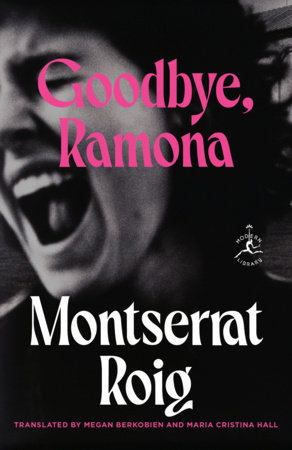
Ramona Jover December 6th, 1894
The day after tomorrow, I’m marrying the widow Climent’s nephew, Francisco Ventura, who saved me the night of the Liceu bombing.* The widow Climent isn’t really a widow, but she calls herself one because her husband ran off to Havana with a Parisian dancer. I know because my maid told me, my parents’ maid, I mean, and she knows because of Pauleta’s mother’s maid.
The day after tomorrow I’m getting married. How funny to be writing such a thing, just like that. I feel none of the
ivresse you read about in novels. It all began with my First Communion, then I was a debutante in a long dress, and tomorrow I’m marrying Francisco.
I like Francisco’s presence. Though I sometimes wish I could find an inkling of melancholy in his countenance, the sadness of romantic spirits from whom we expect nothing in this world. Francisco carries himself well; he’s an educated gentleman, fine and elegant. I can see the tenderness in his eyes when he looks at me. He’s an honest man, and I couldn’t wish for anything more. Father had said, look, dear, you have to remember we come from peasants, and we only grew rich by exporting hazelnuts from Siurana, but the tide could change at any moment. Father says that Francisco has a discreet but steady fortune and that he’s sensible and has Barcelonan roots, and that his family, other than his wishy-washy uncle, is honest and good.
The first few days Francisco came to visit he’d make me laugh because I didn’t know that men would paint their moustaches to make them look daintier. I’d be entertained while he and Father talked business, eyeing the way he’d curl it with his fingertips. He’d grab a few hairs, give them two or three twists, and move his head one way then the other. Sometimes he’d wet his lips with his tongue. He’d poke it out slowly and run it across the edges of his mouth. His lips would stay wet, shining like two cherries beneath his moustache. When he’d come to visit on the days we hosted—especially when Father was around—he’d straighten his shoulders, his spine stiff, his legs like two posts, his gaze, attentive. He’d prop both hands on a cane with a mother-of-pearl top. He seemed somewhat vulgar to me when he did that. I don’t think a gentleman should try to look like a gentleman. It should come from within, without anyone knowing how it’s done. Francisco’s a moneylender and apparently does just fine for himself. Father’s pleased and doesn’t hide it. And even though Mother argues with him, she says it’s nothing to fret over, and that that’s the whole point, to find a proper man for the girl, meaning me.
But I felt so old on the day Francisco said, miss, you don’t know how I love you, you’re everything to me. I long for when I was a child with nothing on my mind, when everything made me happy. I spent all my spare time looking out the window, trying to catch a piece of sky, a strip of clouds that would swell and contract. That way I wouldn’t be sad, because the little clouds would tell me all about their travels, and how the world looked small and how America was a green sheet and Spain was so tiny you could barely see it.
Copyright © 2026 by Montserrat Roig. All rights reserved. No part of this excerpt may be reproduced or reprinted without permission in writing from the publisher.