


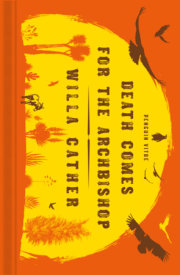


































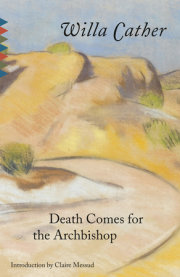

For the 150th anniversary of Willa Cather's birth, and for the first time in Penguin Classics, her quietly beautiful novel of one man's life as he encounters the harsh landscape of the New Mexico desert and the people who inhabit it, with an introduction by National Book Award finalist Kali Fajardo-Anstine

A Penguin Vitae Edition • One of The Atlantic’s Great American Novels of the Past 100 Years


In 1848, following the US's recent acquisition of the American Southwest from Mexico, the young bishop Father Jean Marie Latour receives instruction from the Vatican to oversee a newly created diocese in New Mexico. With his good friend Father Joseph Vaillant in tow, the pair travel through the unforgiving and seemingly-endless desert on mules in attempt to reclaim the region from corrupt priests who have taken mistresses, exhibited greed, and inflicted abuse and genocide on the Mexican and Indigenous residents. But as Father Latour spends more time in New Mexico with the people who have inhabited and influenced it for centuries, he begins to realize that the task he was sent to do is more complicated than anticipated. Rather than leave, though, Father Latour decides to stay and uphold his commitment to the Church and his faith, and gains an eye-opening perspective along the way. Written in 1927 at a time when Cather herself was expanding her own ideas of race, religion, and gender, Death Comes for the Archbishop remains a moving account of one man's physical and spiritual journey of understanding in naturalistic prose as sparse as the desert plains.
WILLA CATHER was born in Virginia in 1873, and was about nine years old when her family moved to Red Cloud, Nebraska. After graduating from the University of Nebraska, she worked for a Lincoln, Nebraska, newspaper, then moved to Pittsburgh and finally to New York City. There she joined McClure’s magazine. After meeting the author Sarah Orne Jewett, she decided to quit journalism and devote herself full time to fiction. Her first novel, Alexander’s Bridge, appeared in 1912, but her place in American literature was established with her first Nebraska novel, O Pioneers!, published in 1913, followed by her most famous pioneer novel, My Antonia, in 1918. In 1922 she won the Pulitzer Prize for One of Ours. Her other novels include Death Comes for the Archbishop, Shadows on the Rock, The Song of the LarkThe Professor’ s HouseMy Mortal Enemy, and Lucy Gayheart. She died in 1947. View titles by Willa Cather

About

For the 150th anniversary of Willa Cather's birth, and for the first time in Penguin Classics, her quietly beautiful novel of one man's life as he encounters the harsh landscape of the New Mexico desert and the people who inhabit it, with an introduction by National Book Award finalist Kali Fajardo-Anstine

A Penguin Vitae Edition • One of The Atlantic’s Great American Novels of the Past 100 Years


In 1848, following the US's recent acquisition of the American Southwest from Mexico, the young bishop Father Jean Marie Latour receives instruction from the Vatican to oversee a newly created diocese in New Mexico. With his good friend Father Joseph Vaillant in tow, the pair travel through the unforgiving and seemingly-endless desert on mules in attempt to reclaim the region from corrupt priests who have taken mistresses, exhibited greed, and inflicted abuse and genocide on the Mexican and Indigenous residents. But as Father Latour spends more time in New Mexico with the people who have inhabited and influenced it for centuries, he begins to realize that the task he was sent to do is more complicated than anticipated. Rather than leave, though, Father Latour decides to stay and uphold his commitment to the Church and his faith, and gains an eye-opening perspective along the way. Written in 1927 at a time when Cather herself was expanding her own ideas of race, religion, and gender, Death Comes for the Archbishop remains a moving account of one man's physical and spiritual journey of understanding in naturalistic prose as sparse as the desert plains.

Author

WILLA CATHER was born in Virginia in 1873, and was about nine years old when her family moved to Red Cloud, Nebraska. After graduating from the University of Nebraska, she worked for a Lincoln, Nebraska, newspaper, then moved to Pittsburgh and finally to New York City. There she joined McClure’s magazine. After meeting the author Sarah Orne Jewett, she decided to quit journalism and devote herself full time to fiction. Her first novel, Alexander’s Bridge, appeared in 1912, but her place in American literature was established with her first Nebraska novel, O Pioneers!, published in 1913, followed by her most famous pioneer novel, My Antonia, in 1918. In 1922 she won the Pulitzer Prize for One of Ours. Her other novels include Death Comes for the Archbishop, Shadows on the Rock, The Song of the LarkThe Professor’ s HouseMy Mortal Enemy, and Lucy Gayheart. She died in 1947. View titles by Willa Cather

Books for Black History Month

In honor of Black History Month this February, we are highlighting essential fiction and nonfiction for students, teachers, and parents to share and discuss this month and beyond. Join Penguin Random House Education in celebrating the contributions of Black authors and illustrators by exploring the titles here: BLACK HISTORY – MIDDLE SCHOOL BLACK HISTORY –

Read more