Winner of the Nobel Prize 
Winner of the Anisfield-Wolf Book Award for Nonfiction


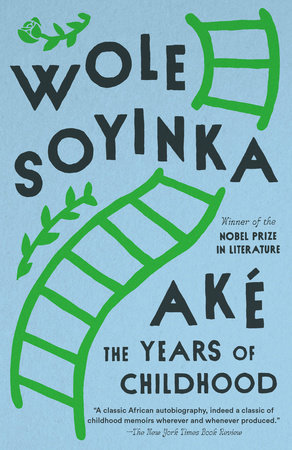
Soyinka tells the story of his boyhood, before and during World War II, in a western Nigerian town called Ake.

“Unquestionably Africa’s most versatile writer and arguably her finest.” —The New York Times Book Review

“A brilliant imagist who uses poetry and drama to convey his inquisitiveness, frustration and sense of wonder. . . .” —Newsweek

“A lovely, magical book. . . .” —The Washington Post
© Glen Gratty
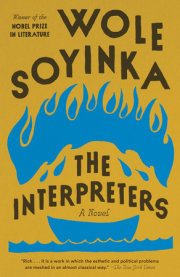
WOLE SOYINKA was awarded the Nobel Prize in Literature in 1986. Born in Abeokuta, Nigeria, in 1934, he is an author, playwright, poet, and political activist whose prolific body of work includes The Interpret­ers, his debut novel that was published in 1965, and Death and the King's Horseman, a play that was first performed in 1976. So­yinka was twice jailed in Nigeria for his crit­icism of the Nigerian government, and he destroyed his U.S. Green Card in 2016 when Donald Trump was elected president of the United States. View titles by Wole Soyinka
  • WINNER | 1986
    Nobel Prize
  • WINNER | 1983
    Anisfield-Wolf Book Award
"A lovely, magical book." --The Washington Post

"A brilliant imagist who uses poetry and drama to convey his inquisitiveness, frustration, and sense of wonder." --Newsweek

Brilliant. . . . Transcendant. . . . It locates the lost child in all of us, underneath language, inside sound and smell, wide-eyed, brave and flummoxed. . . . Soyinka belongs in the company of . . . V. S. Naipaul, V. S. Pritchett, and Vladimir Nabokov." --The New York Times

"A delightful memoir." --The Atlantic

"Unquestionably Africa's most versatile writer and arguably her finest. . . . Ake is a classic of African autobiography, indeed a classic of childhood memoirs wherever and whenever produced." --The New York Times Book Review

About

Winner of the Nobel Prize 
Winner of the Anisfield-Wolf Book Award for Nonfiction


Soyinka tells the story of his boyhood, before and during World War II, in a western Nigerian town called Ake.

“Unquestionably Africa’s most versatile writer and arguably her finest.” —The New York Times Book Review

“A brilliant imagist who uses poetry and drama to convey his inquisitiveness, frustration and sense of wonder. . . .” —Newsweek

“A lovely, magical book. . . .” —The Washington Post

Author

© Glen Gratty
WOLE SOYINKA was awarded the Nobel Prize in Literature in 1986. Born in Abeokuta, Nigeria, in 1934, he is an author, playwright, poet, and political activist whose prolific body of work includes The Interpret­ers, his debut novel that was published in 1965, and Death and the King's Horseman, a play that was first performed in 1976. So­yinka was twice jailed in Nigeria for his crit­icism of the Nigerian government, and he destroyed his U.S. Green Card in 2016 when Donald Trump was elected president of the United States. View titles by Wole Soyinka

Awards

  • WINNER | 1986
    Nobel Prize
  • WINNER | 1983
    Anisfield-Wolf Book Award

Praise

"A lovely, magical book." --The Washington Post

"A brilliant imagist who uses poetry and drama to convey his inquisitiveness, frustration, and sense of wonder." --Newsweek

Brilliant. . . . Transcendant. . . . It locates the lost child in all of us, underneath language, inside sound and smell, wide-eyed, brave and flummoxed. . . . Soyinka belongs in the company of . . . V. S. Naipaul, V. S. Pritchett, and Vladimir Nabokov." --The New York Times

"A delightful memoir." --The Atlantic

"Unquestionably Africa's most versatile writer and arguably her finest. . . . Ake is a classic of African autobiography, indeed a classic of childhood memoirs wherever and whenever produced." --The New York Times Book Review

Books for Black History Month

In honor of Black History Month this February, we are highlighting essential fiction and nonfiction for students, teachers, and parents to share and discuss this month and beyond. Join Penguin Random House Education in celebrating the contributions of Black authors and illustrators by exploring the titles here: BLACK HISTORY – MIDDLE SCHOOL BLACK HISTORY –

Read more